Adidas
Challenge
During the initial workshop, it became clear that stakeholders lacked a shared understanding of their own workflows, responsibilities, and needs.
The initial scope was fragmented, and largely based on assumptions rather than validated insights.
Process
So, we agreed on initial research and I initiated a discovery phase to define the problem space
user interview
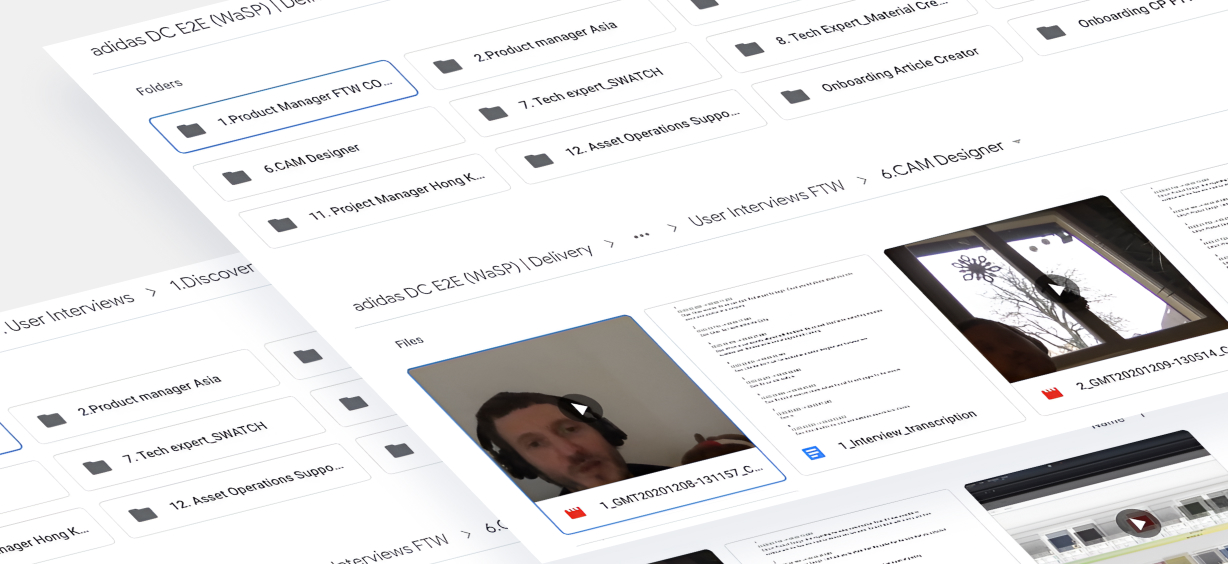
Conducted 19 in-depth interviews across key roles involved in the seasonal process.
Each role included:
- recorded interview sessions
- transcripts
- supporting screenshots and documentation
synthesis: role-based analysis
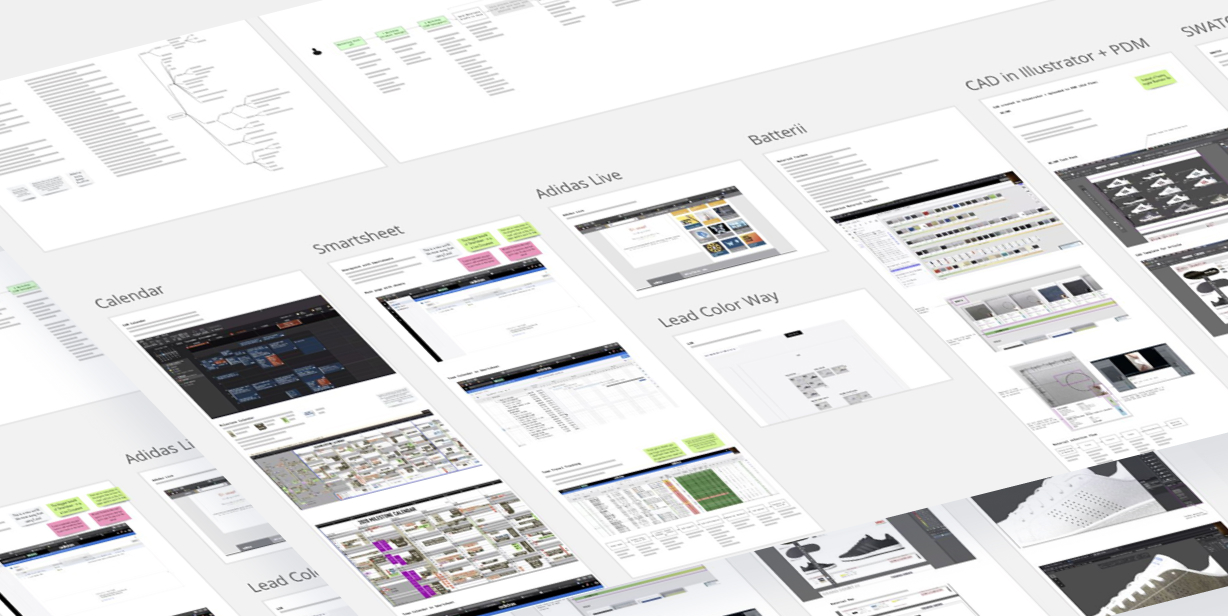
All research data was structured into role-based system mappings using Miro.
For each role, I developed:
- Personas
- User flows
- Role-specific artifacts
- Pain points and dependencies
production process mapping
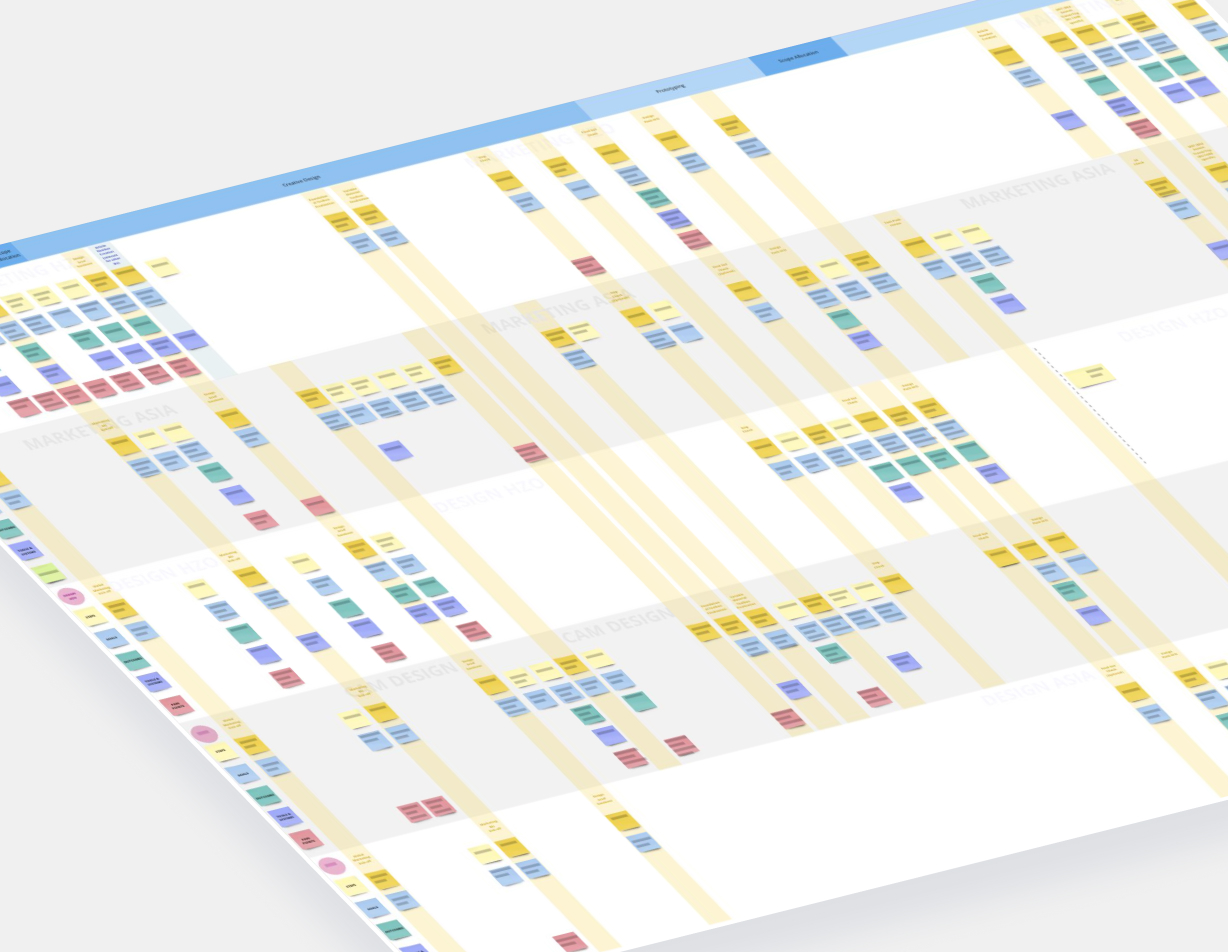
Mapped the full end-to-end seasonal production process across all roles.
This included:
- stakeholders and responsibilities
- workflows and task flows
- communication points
- documentation and tools
- validation steps
- task handovers
- edge cases and blockers
This became the first unified view of the system across departments.
scope definition
Following the discovery phase, we established a clear understanding of:
- user roles
- needs and expectations
- system gaps
This allowed us to define a realistic and structured product scope.
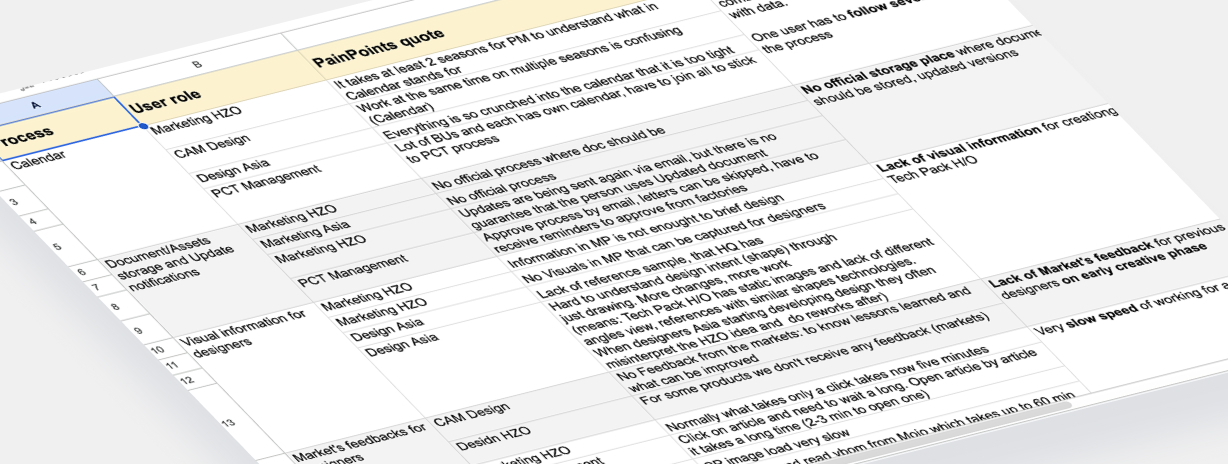
Instead of building a new product from scratch, we reframed the solution: Redesign and adapt the existing B2B platform to better support real user workflows and business needs.
design approach
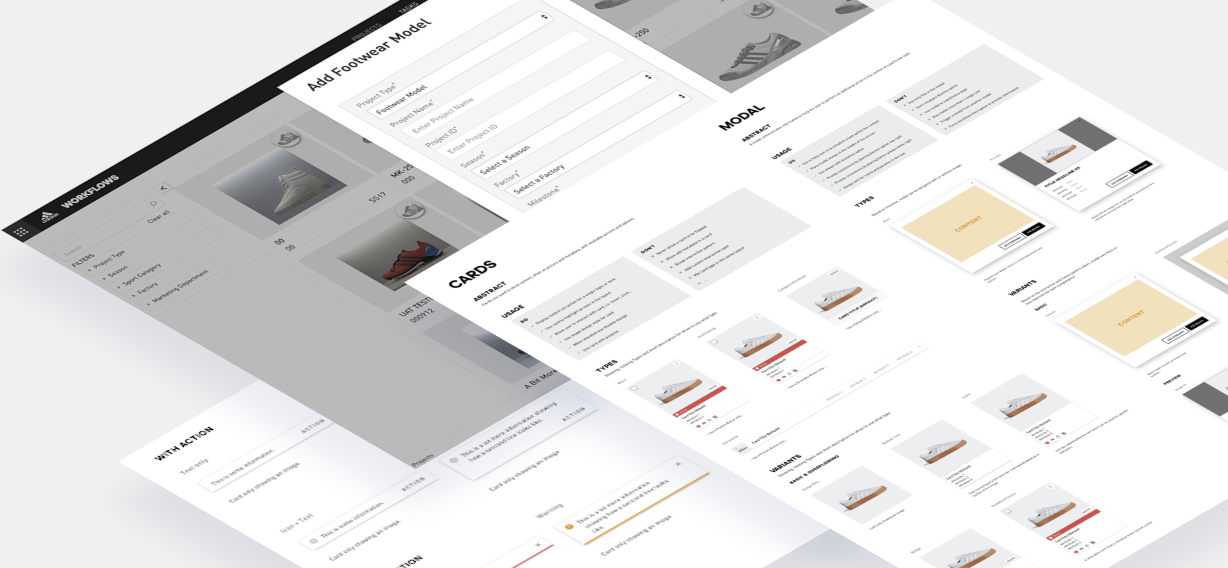
Worked within Adidas's established design system, while extending it with new components (validated through Design HQ when required).
Focused on:
- end-to-end flows
- system consistency
- scalability
- edge-case handling
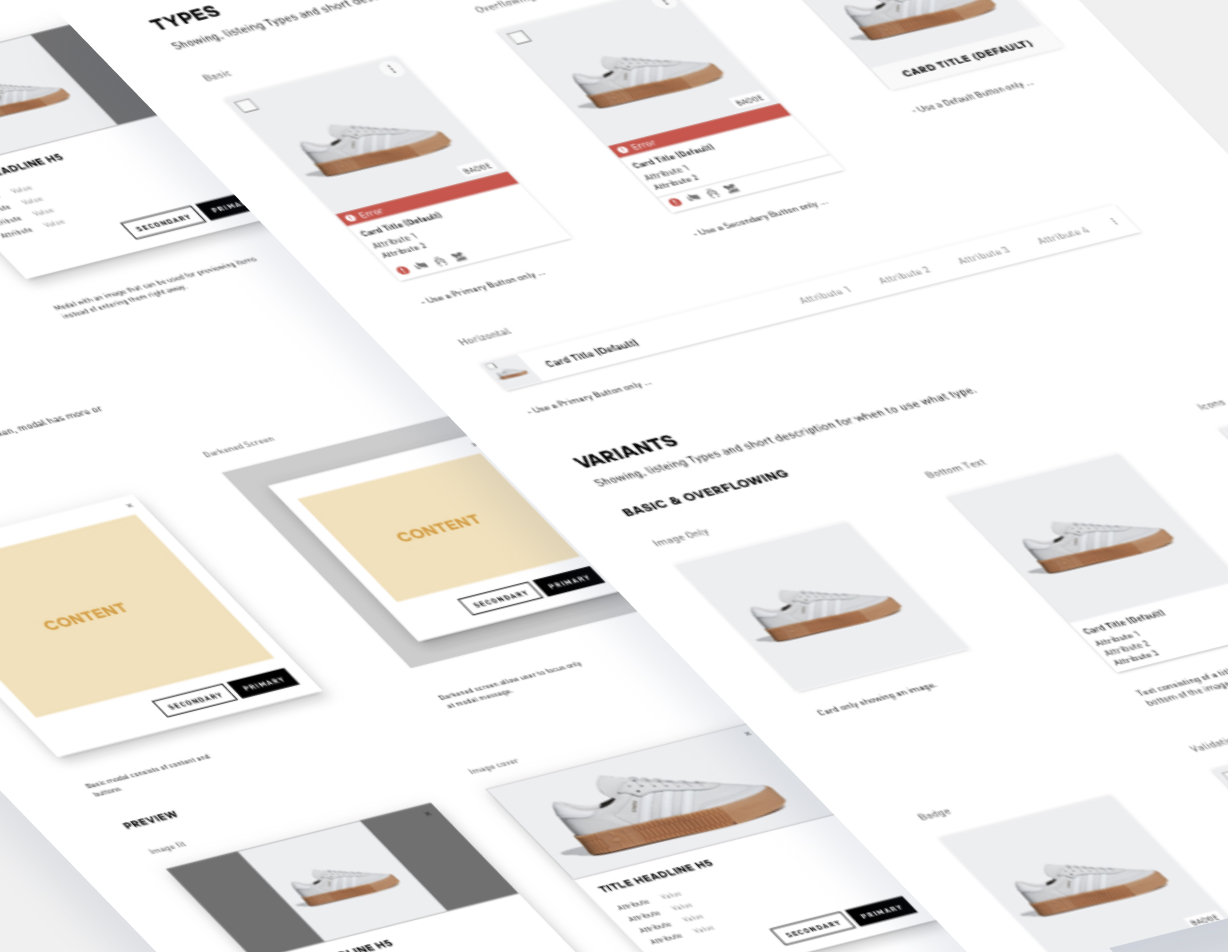
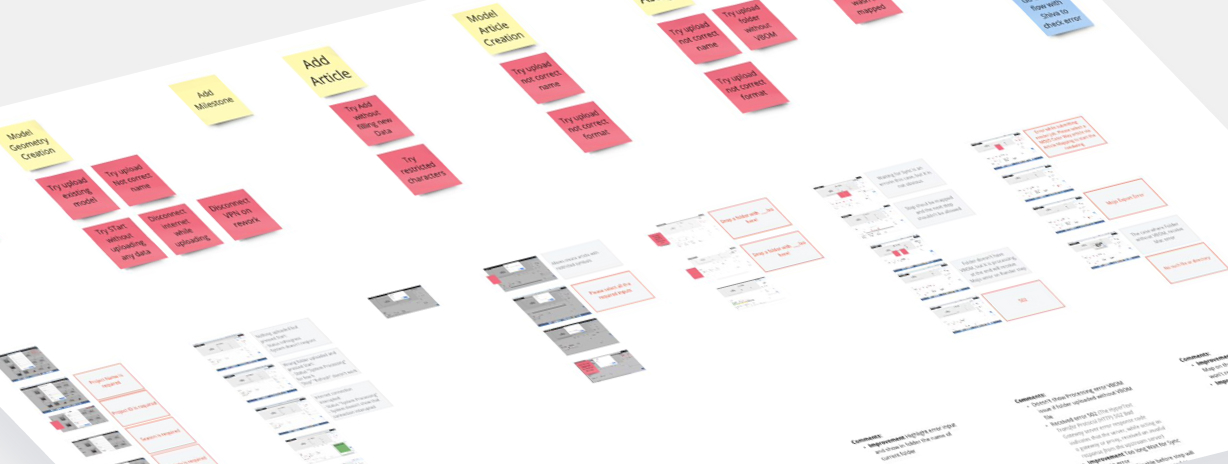
flow design
Designed complete user flows covering:
- primary scenarios
- alternative paths
- edge cases
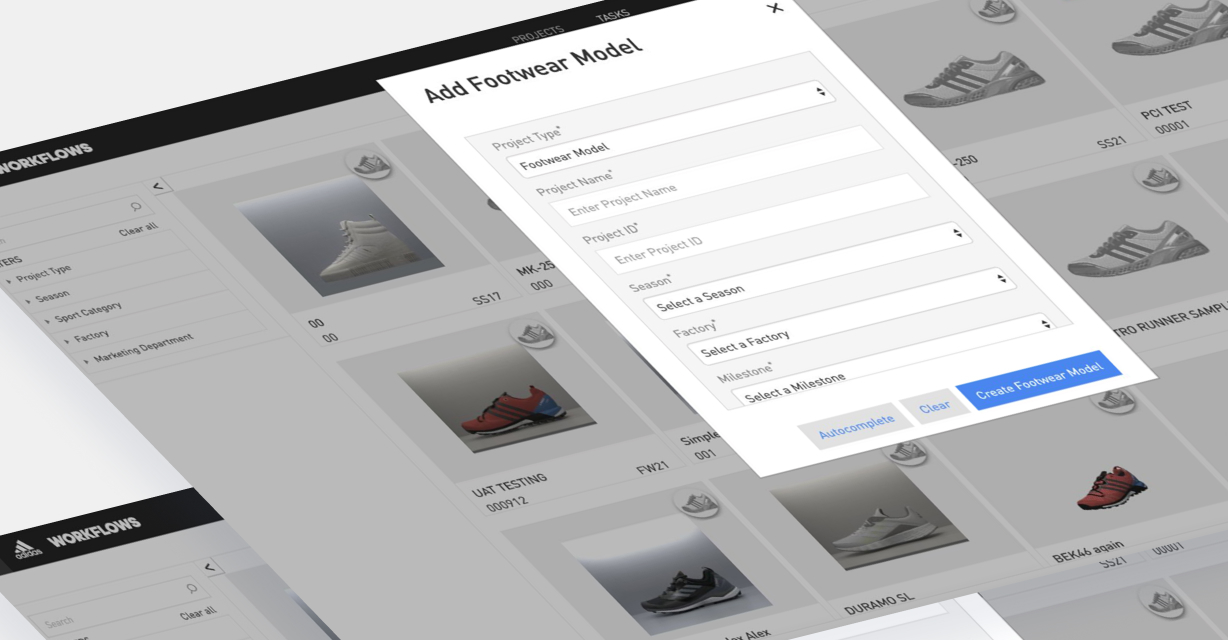
visual design
Designed scalable UI patterns and visual solutions to support complex workflows, including forms, data structures, and system interactions.
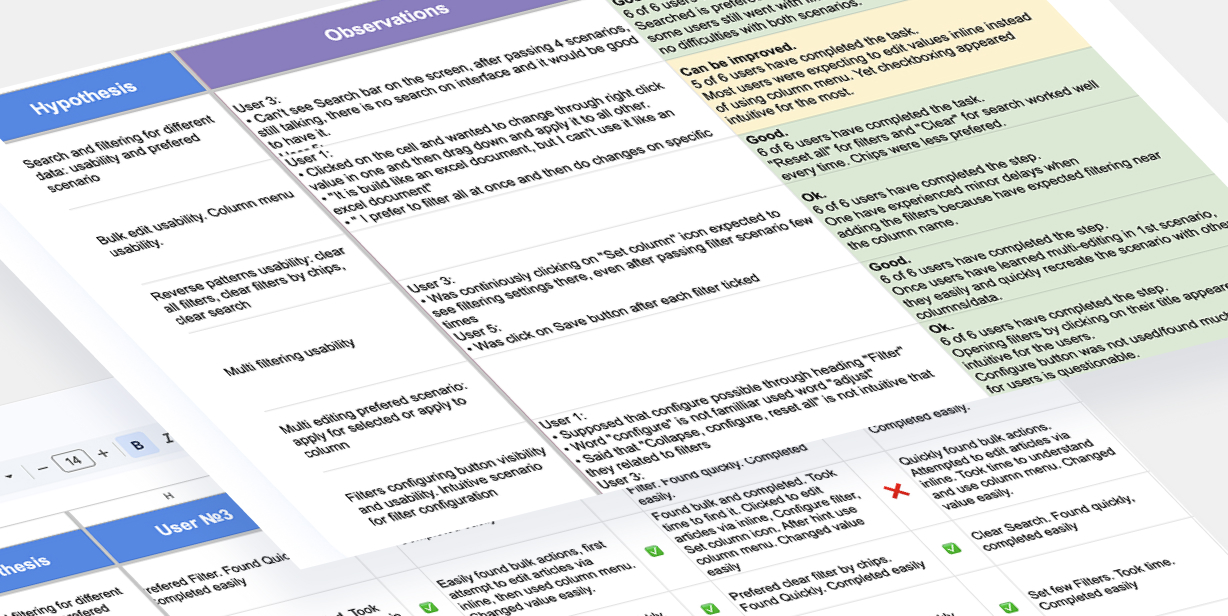
usability testing
Conducted regular usability testing sessions after each implementation phase.
This allowed us to:
- validate decisions
- identify usability issues
- continuously improve the product
Results
12 months (Discovery 1+ m)
2 Product Designers (work in parallel Footwear and Apparel)
- Brought alignment across 6+ departments and 3 global regions
- Created the first unified view of the seasonal production process
- Conducted 19 interviews to uncover real workflows and system gaps
- Shifted stakeholder mindset from assumption-based to research-driven decisions
- Identified key bottlenecks and inefficiencies across the workflow
- Reframed product direction from building a new solution to redesigning an existing system
- Research artifacts became actively used by internal teams
Adidas taught me that constraint of unclear scope wasn't a problem, it was an opportunity. Walking into a project with no defined requirements and emerging with a system map that the entire organisation wanted to use — that's when I understood what research-led design actually means at enterprise scale.