Paragon
Challenge
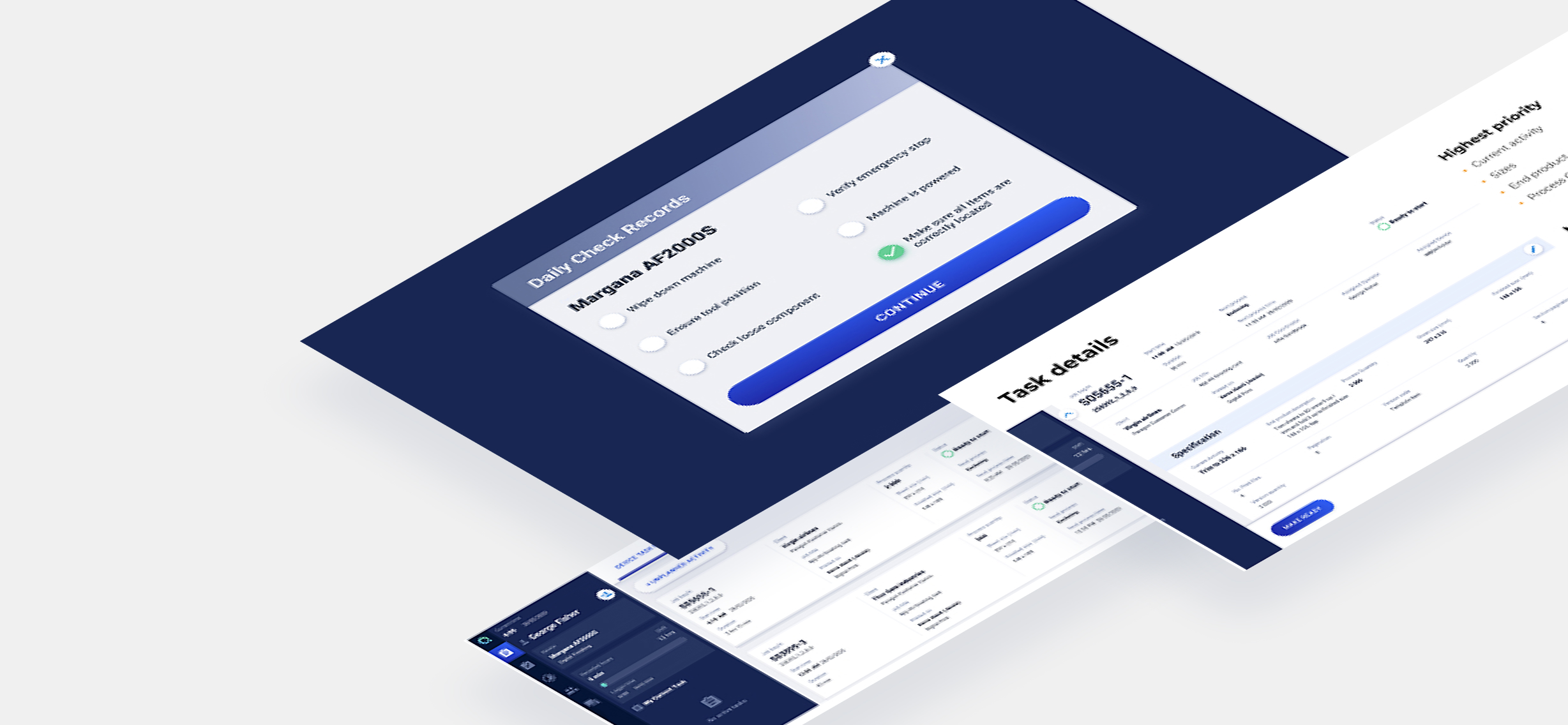
Despite full functionality, the Paragon B2B system had low adoption and high friction: operators struggled to complete tasks efficiently, workflows in the system did not match real processes, excessive navigation and manual searching slowed down operations.
Process
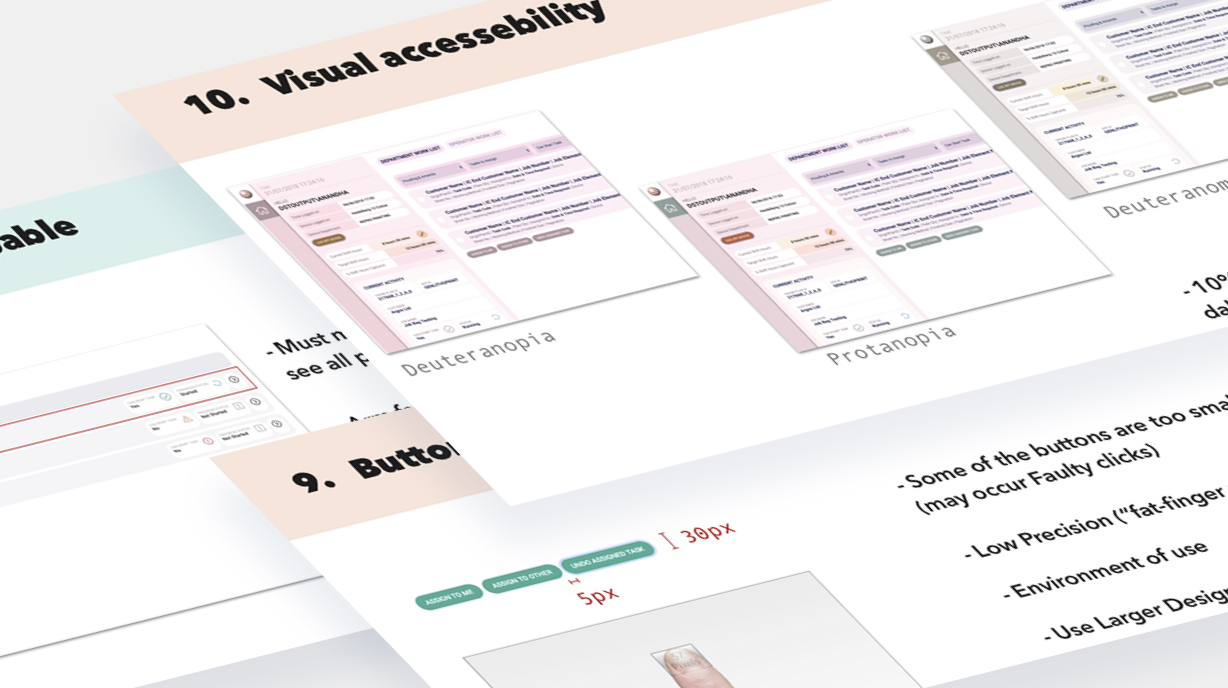
UX Audit
Conducted a full audit of the existing system to identify:
- usability issues
- inconsistencies in interaction patterns
- navigation and information architecture problems
Outcome: Defined key friction areas and initial hypotheses.
Insight: Critical issues were discovered at this stage, as the whole system wasn't designed for a touchscreen and operator's working environment.
User Interviews
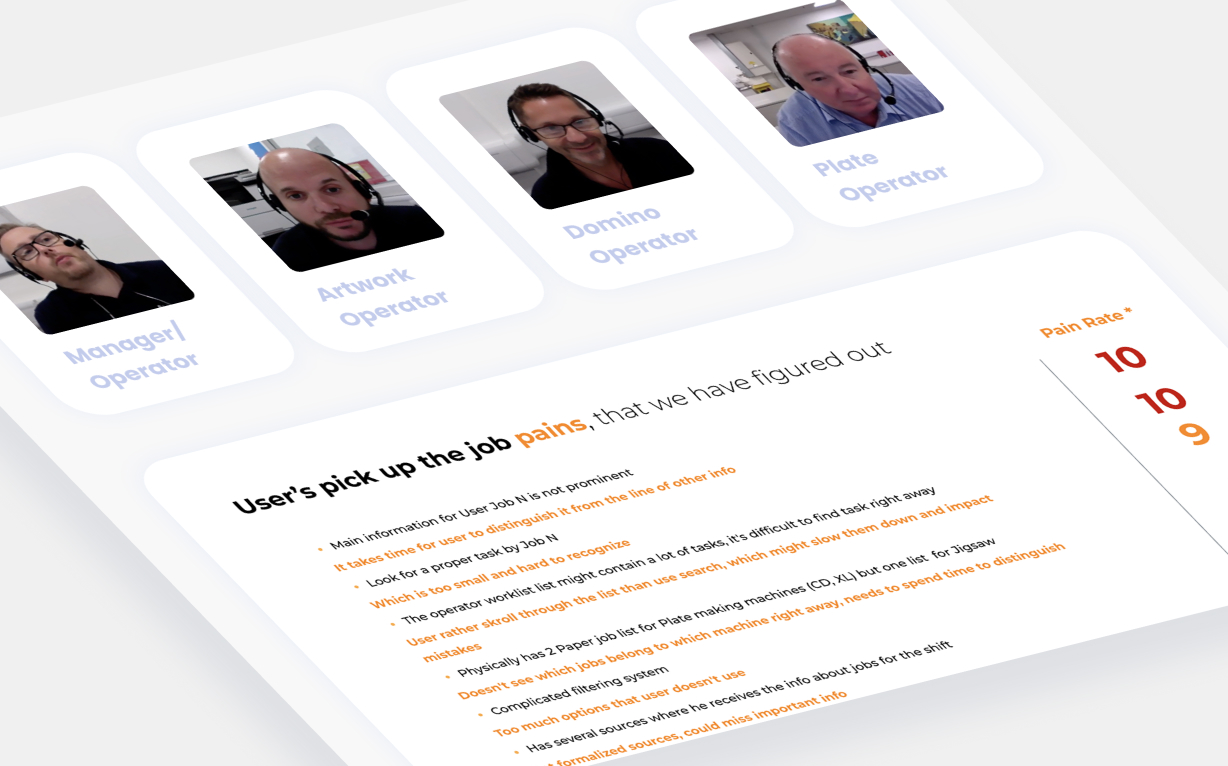
Conducted 8+ interviews with operators and stakeholders.
Goals:
- understand user motivations and constraints
- map real workflows across departments
Key insights:
- operators relied on memory and workarounds
- system did not reflect real task sequences
- high cognitive load during task execution
Workflow Discovery Workshop
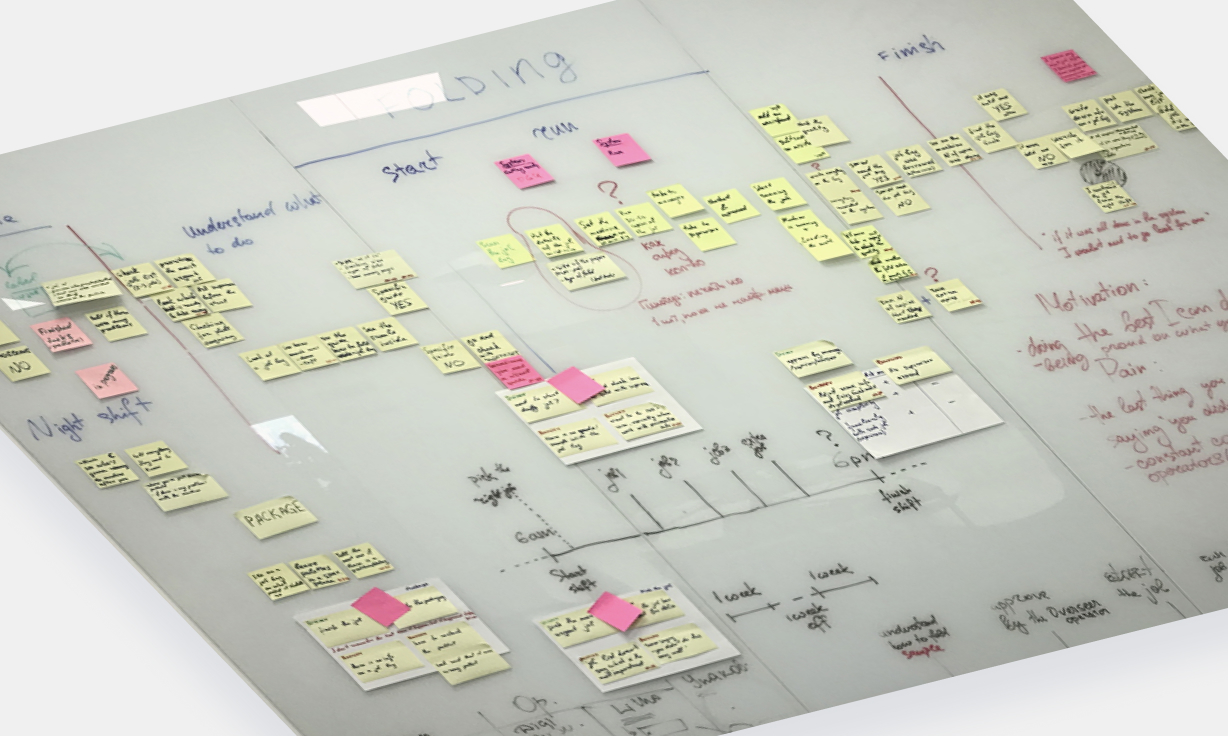
Facilitated a workshop with stakeholders to:
- align on actual workflows
- visualize task dependencies
- identify breakdown points
Created a shared understanding between business and users, reducing assumption gaps.
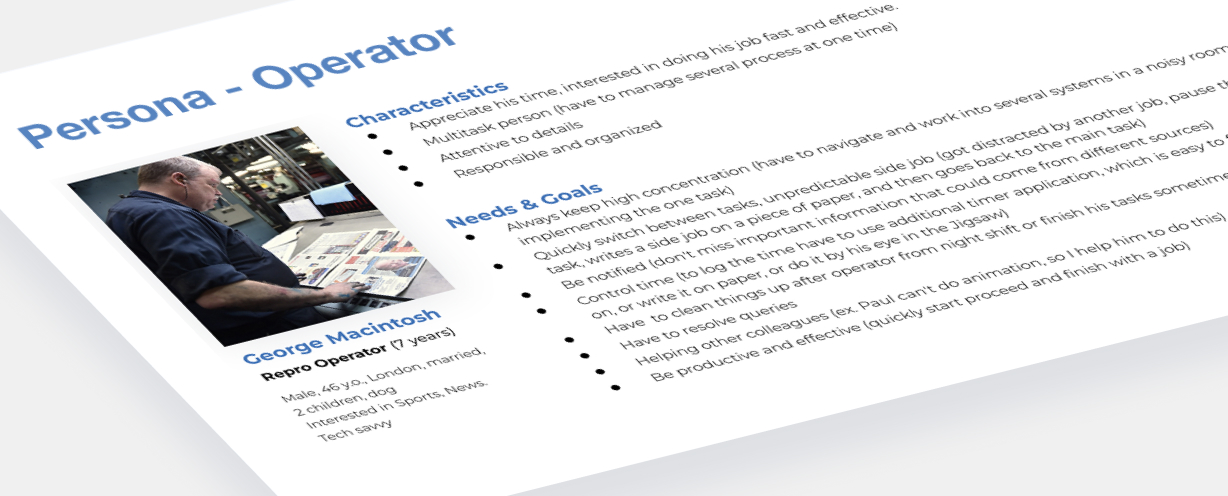
Personas
Synthesised research into personas to:
- represent key user groups
- communicate needs to stakeholders
- support decision-making
Shifted discussions from feature-based → user-centered thinking.
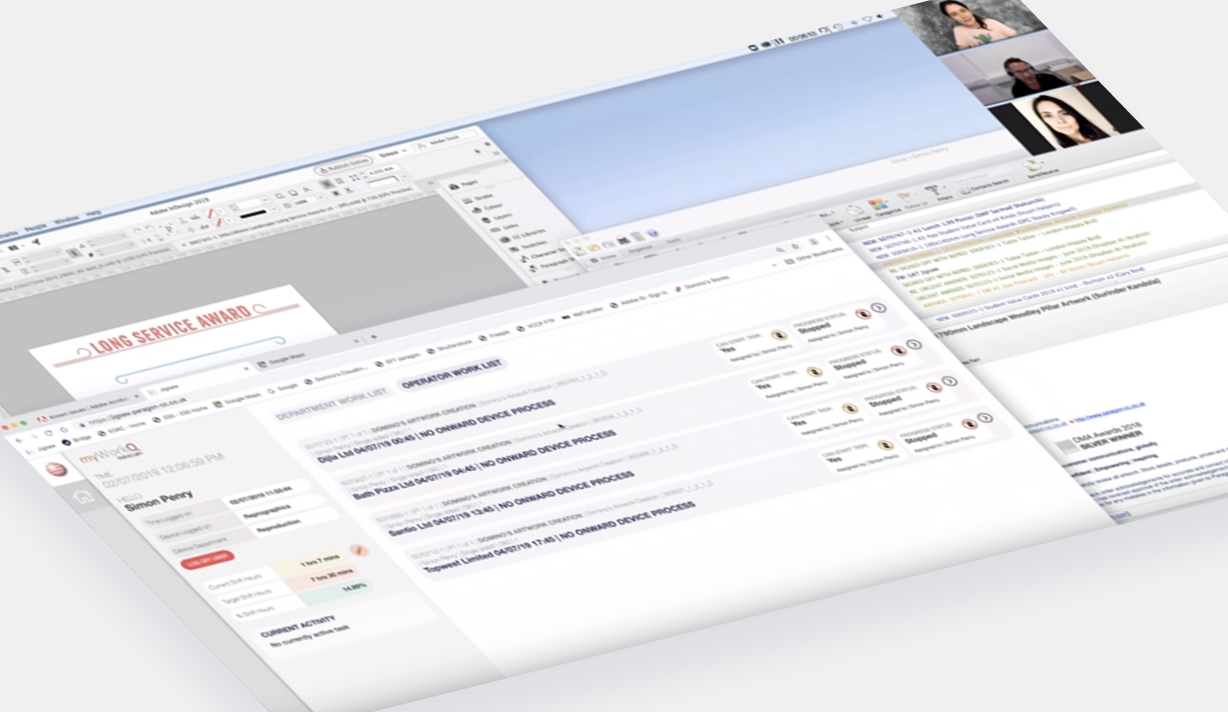
Usability Testing (Current System)
Conducted usability testing sessions to:
- validate research findings
- observe real task execution
- measure efficiency and errors
Findings:
- high task completion time
- frequent navigation errors
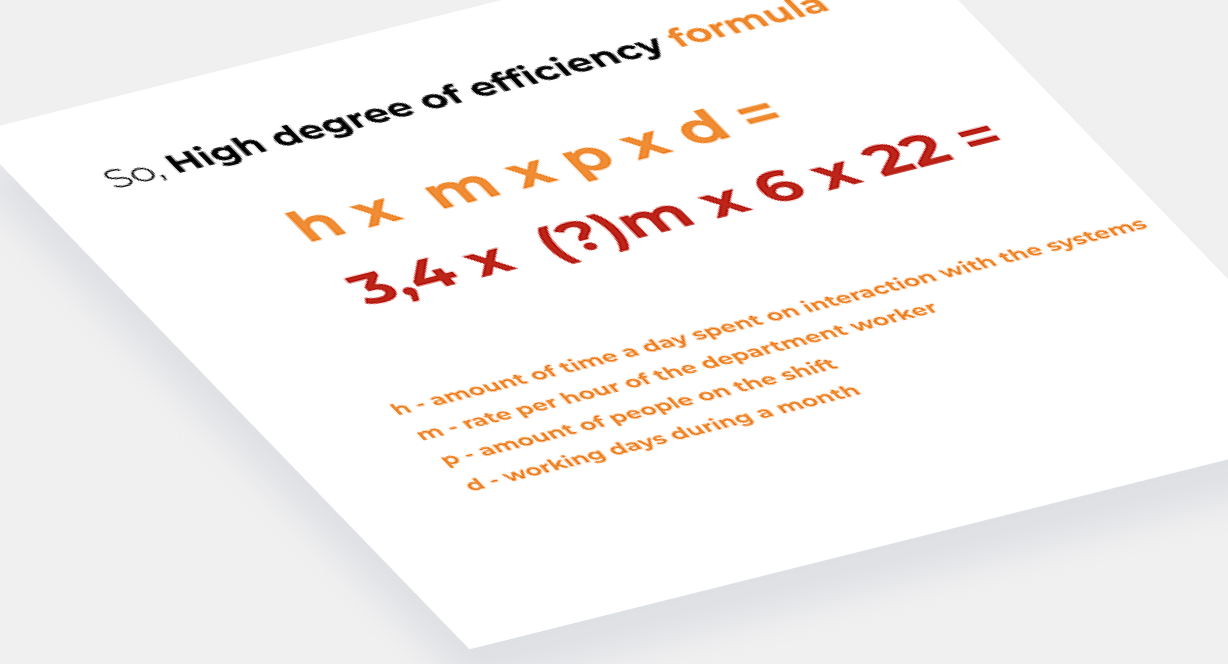
Business Impact Calculation
Quantified inefficiencies by translating UX problems into business metrics.
Estimated impact:
- ~20–30% time loss per operator
- significant hidden operational cost
This step was critical in aligning stakeholders and securing redesign support.
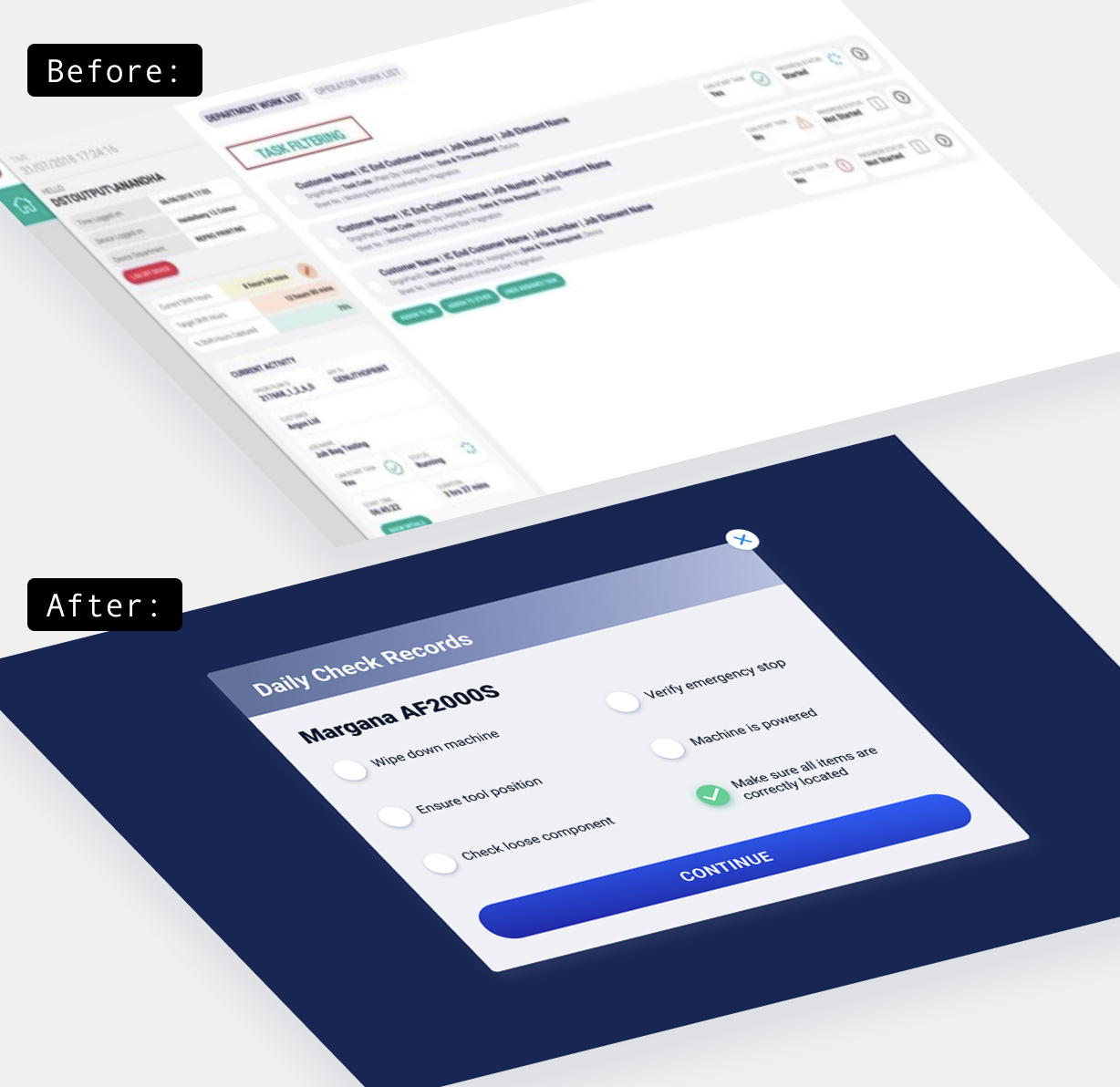
Redesign (HCD Approach)
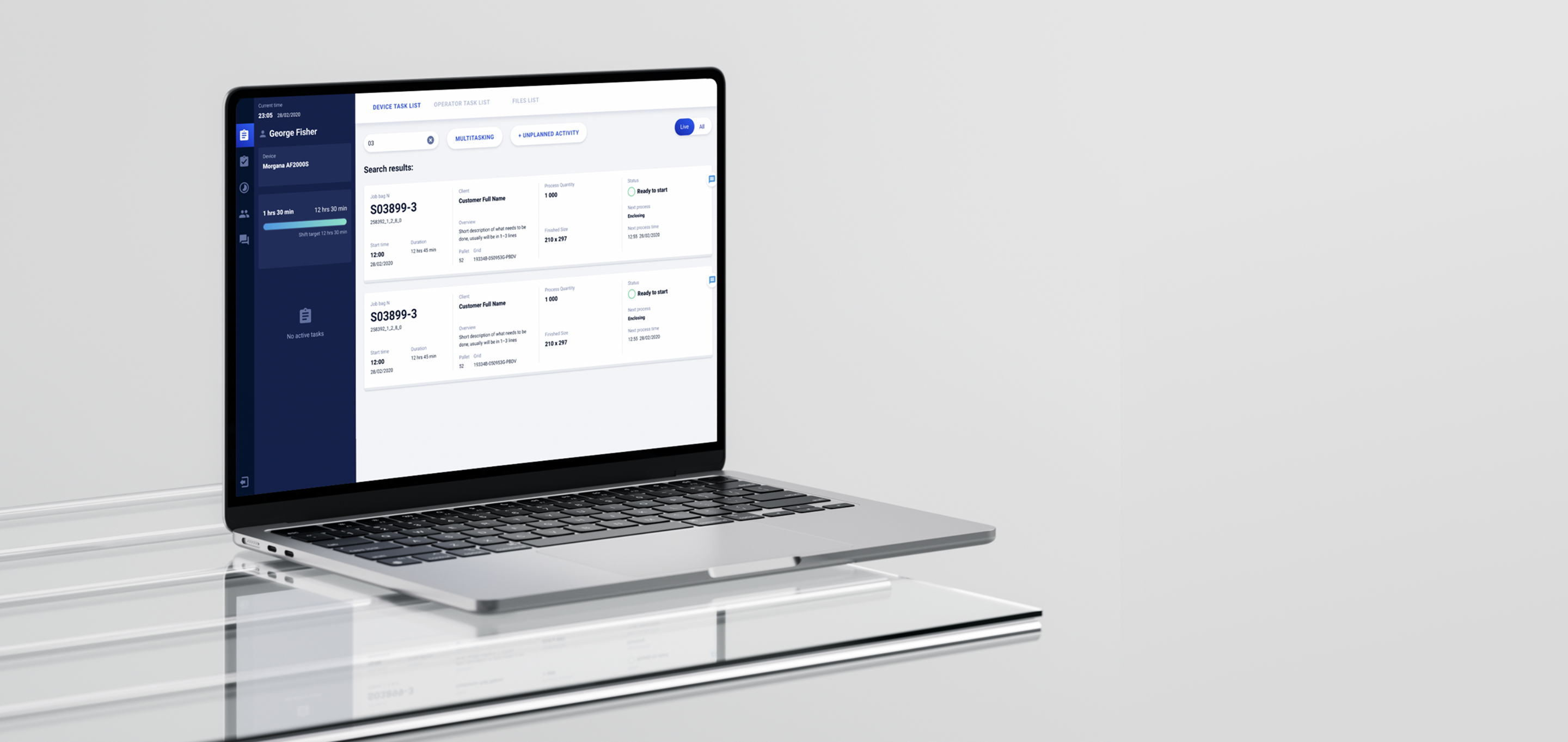
For a new solution I took into consideration operator's working environment, department workflow and data necessary for task fulfilment.
Among features proposed for the business:
- Changed button system — added metaphor of clickability by adding volume and space (skeuomorphism)
- Color, clear contrast and use of Blue as primary action color for best accessibility rate
- Font size was illegible for operators — highly increased where needed
- Navigation made self-evident based on interview findings; improved content organisation
- Eliminated extra information and visual distractions on each production stage
- Improved filtering and search solutions
Usability Testing (Redesign)
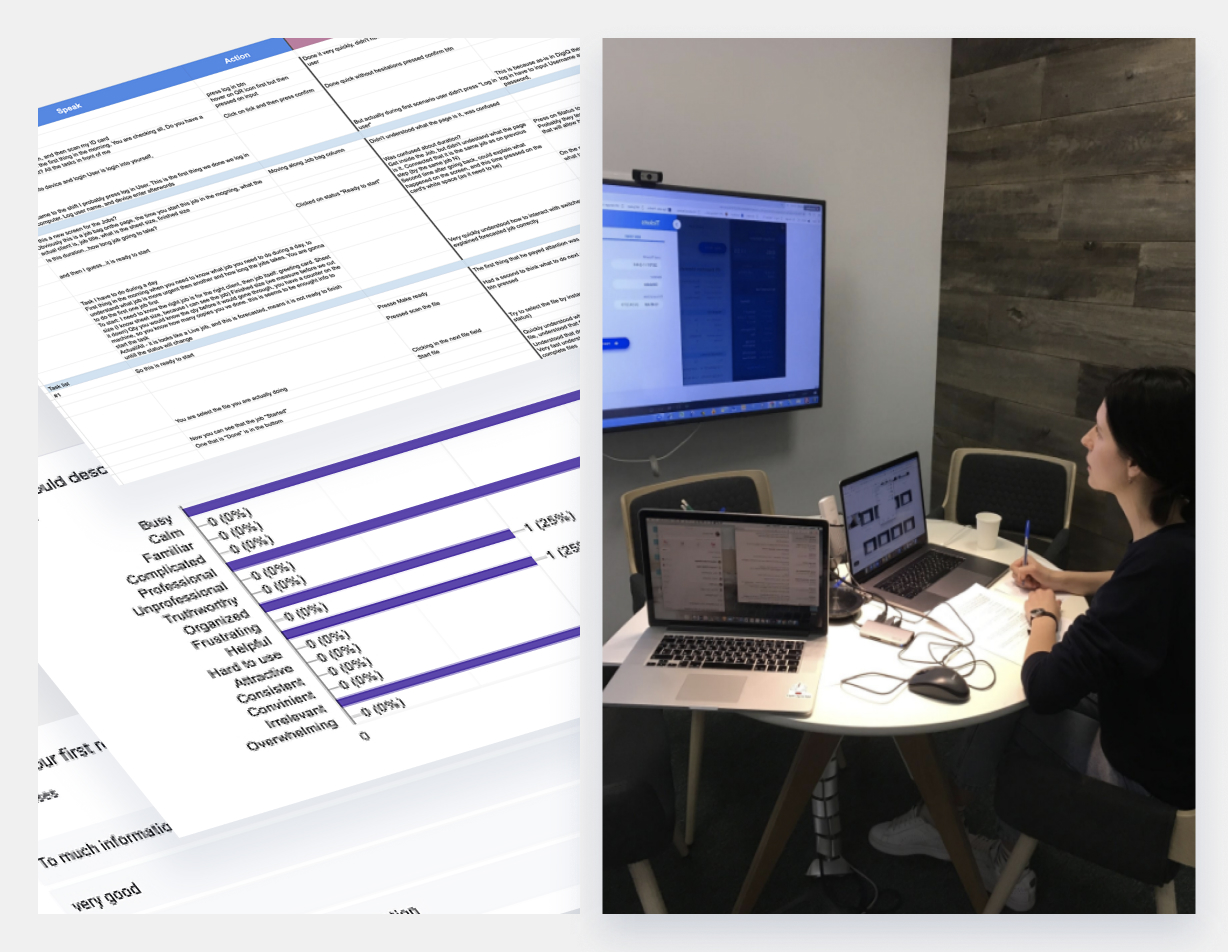
Tested redesigned solution with users.
Measured:
- task completion time
- error rate
- user satisfaction
Also conducted a survey to capture overall perception.
- improved clarity
- faster task execution
- positive user feedback
Iteration & Implementation
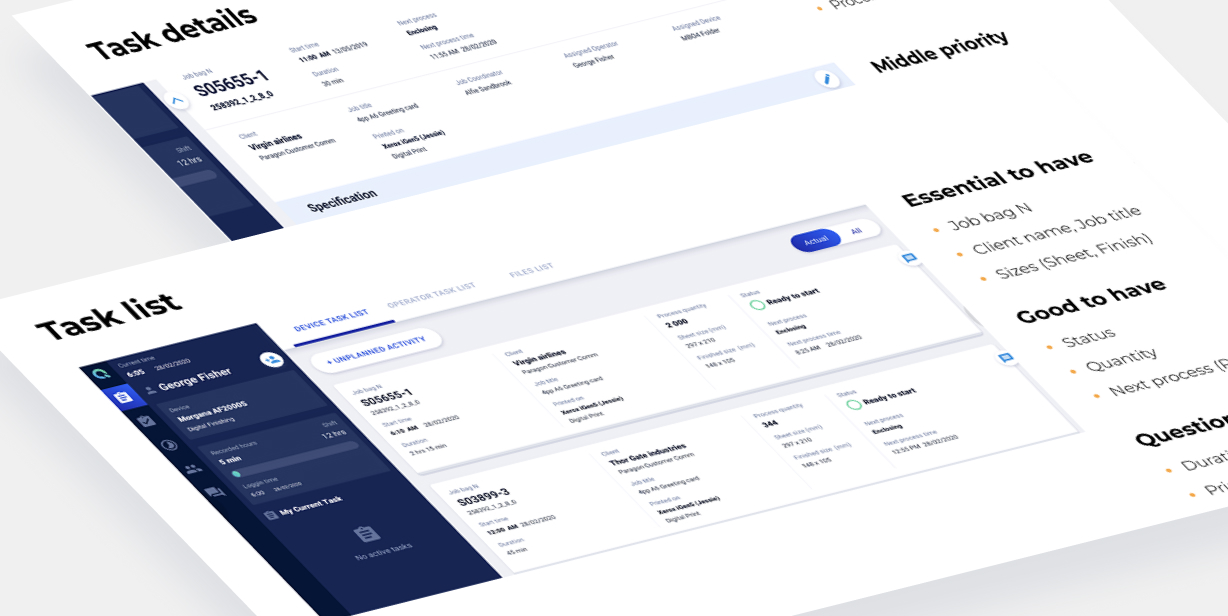
Identified improvements for the first iteration.
Delivered refinements based on testing.
Supported implementation and rollout.
Results
6 months (research → redesign → validation)
1 Product Designer (me, full ownership)
User Impact
- Reduced time to complete tasks (~20–40% faster)
- Eliminated need for manual search in workflows
- Increased clarity of task prioritisation
- Improved onboarding experience
- Operators transitioned to the new system after onboarding
- Reduced reliance on external tools and manual processes
Business impact
- Real-time visibility into task execution
- Improved capacity planning and workload distribution
- Reduced operational inefficiencies
- Increased adoption of the system
- Successful rollout into production
Paragon (Part II)
Process
One of the biggest wins of previous cooperation with Paragon was, their perception switch from "girl (designer) who does fancy images" into "researcher that brings sense to our digital product."
interviews
& observations
testings
usability sessions
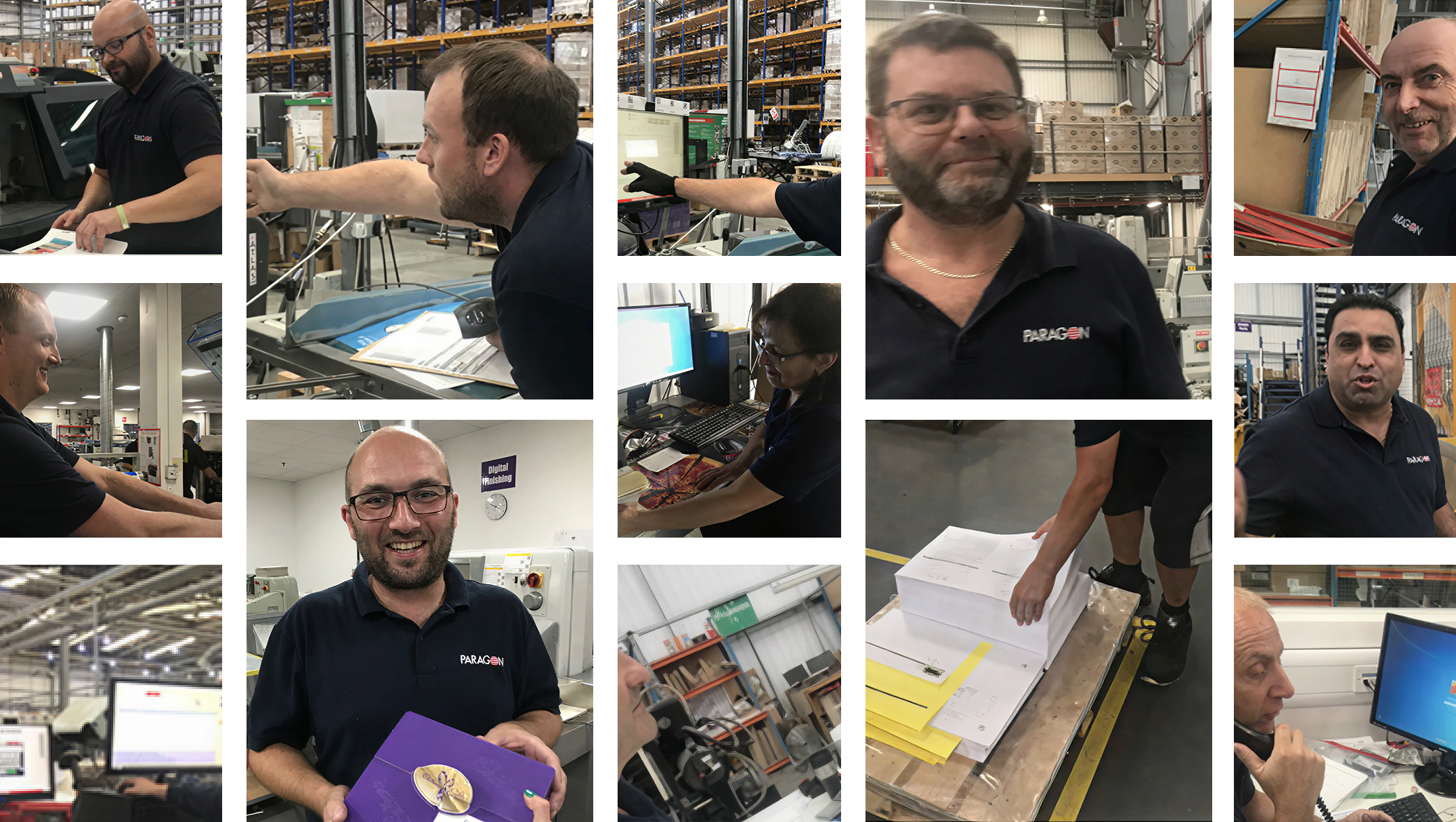
Ethnographic Research
It reveals user behaviour in real life context uncovering hidden pain points, workarounds, and workflow inefficiencies that are often missed in interviews.
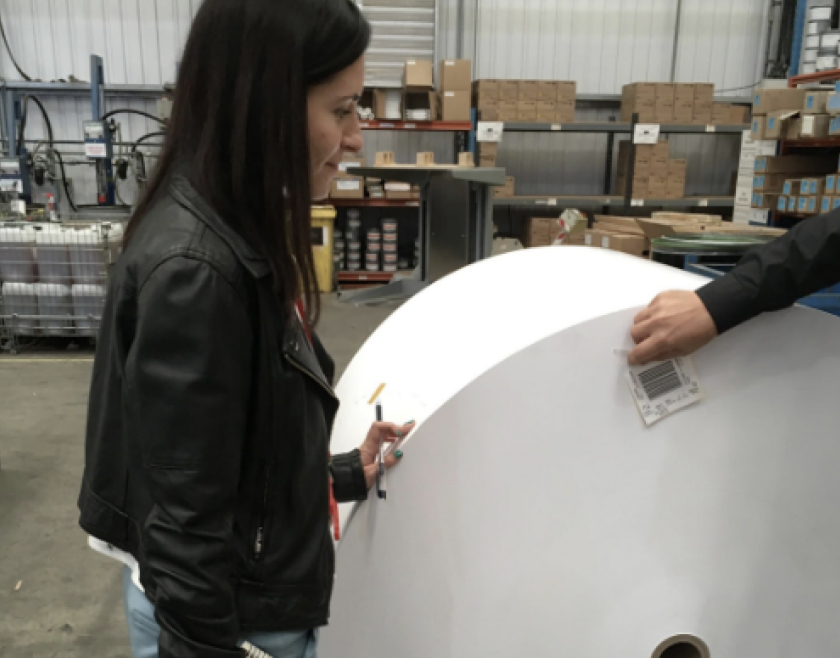
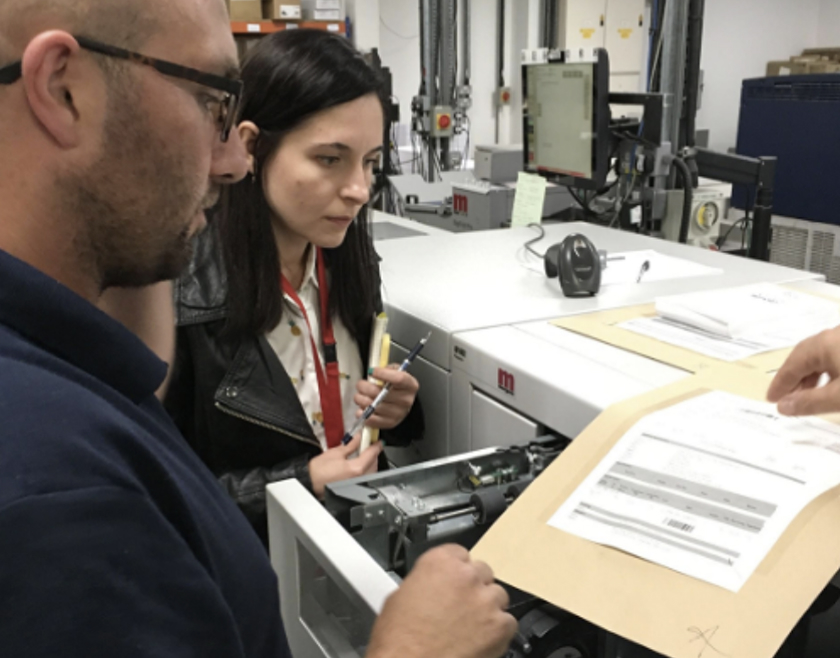
Workarounds
Collecting workarounds and real process environment insights.
Because when the user is really struggling with the process... He is trying to create his own solutions how to make it easier. This is our point to pay attention.
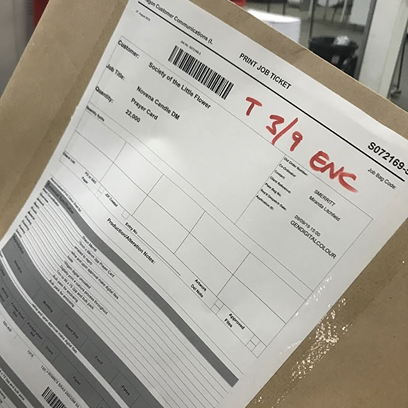
Invented easy coding for tasks (in red)
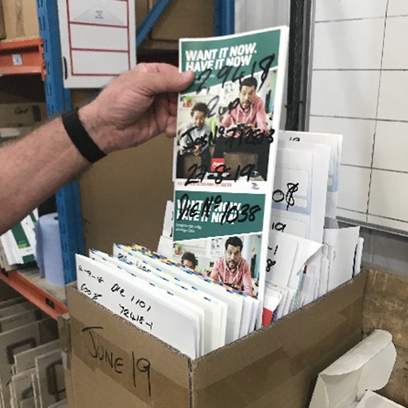
Collected own archive with visual task's examples
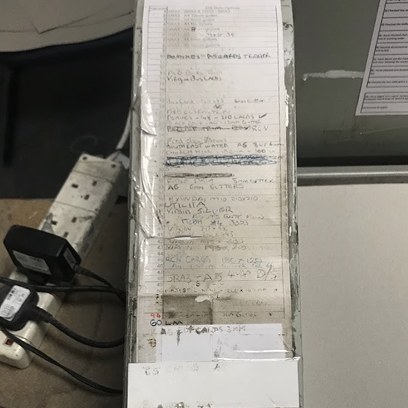
Cheatsheet for task type and machine operation №
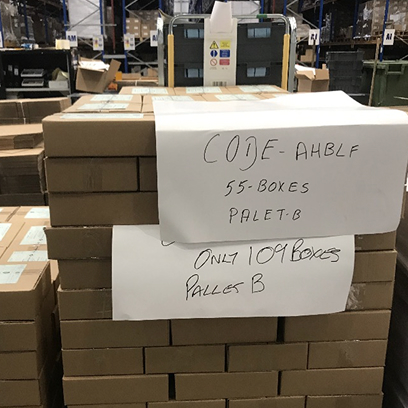
Message to handover shift to other operator
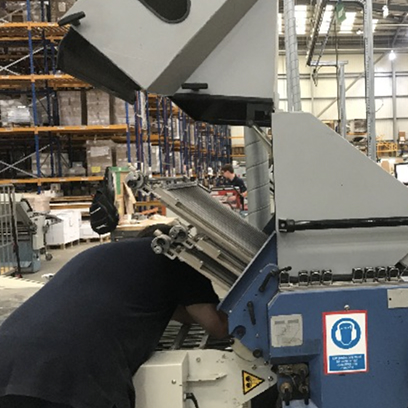
Machine often breaks down, but there is no such status in system
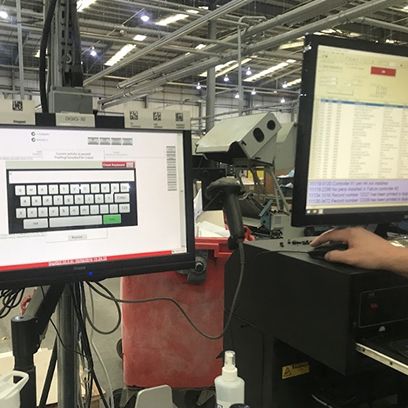
No touchscreen, so user needs to type in info by mouse
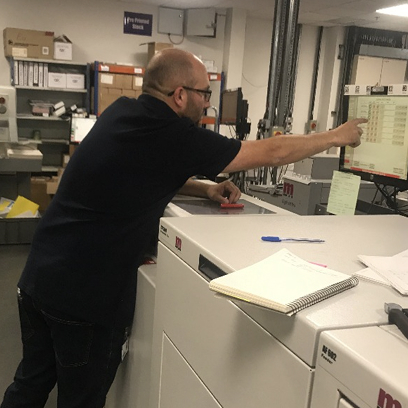
Position of touchscreen doesn't allow convenient work
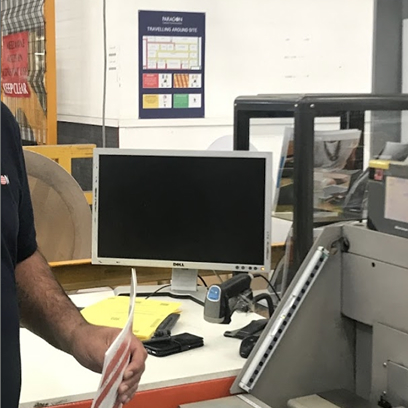
Forget to resume paused job, because screen turned black
Processing User Interviews
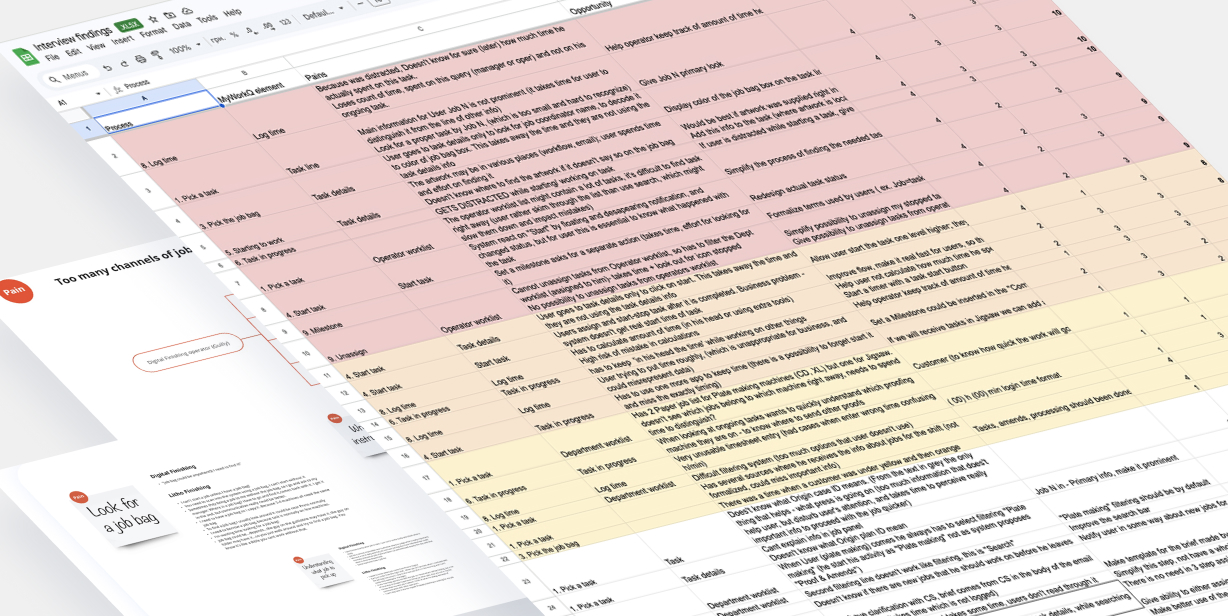
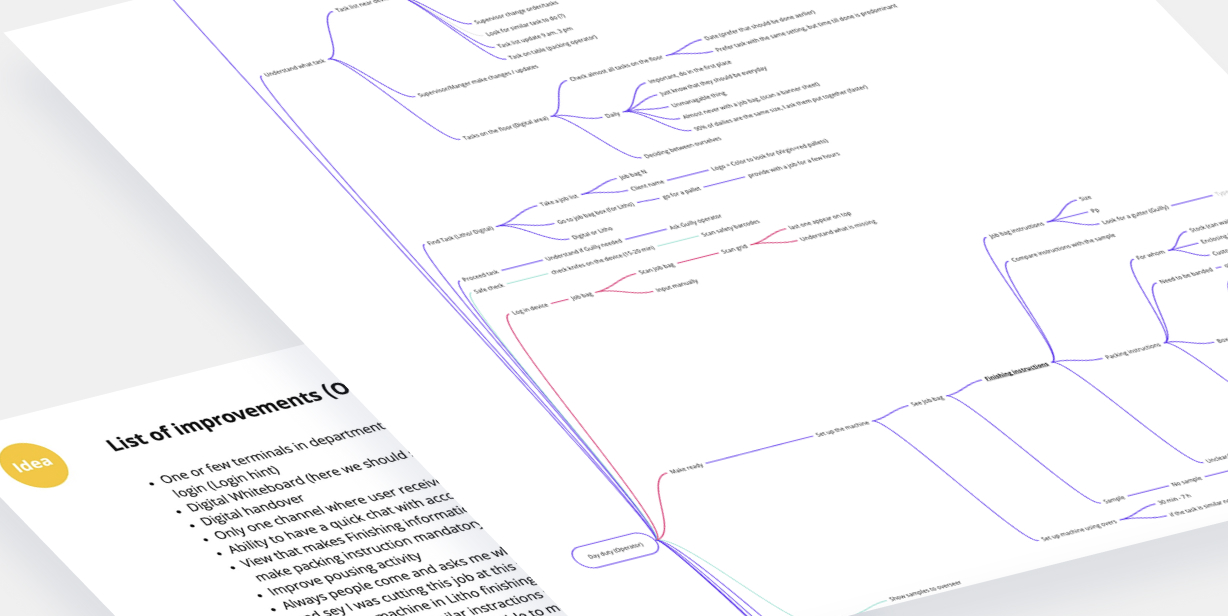
The results of conducted user research were deeply learned and analysed. Translated into List of pain points later processed into Interview findings, clustering them and prioritising into key finding based on severity and frequency rate.
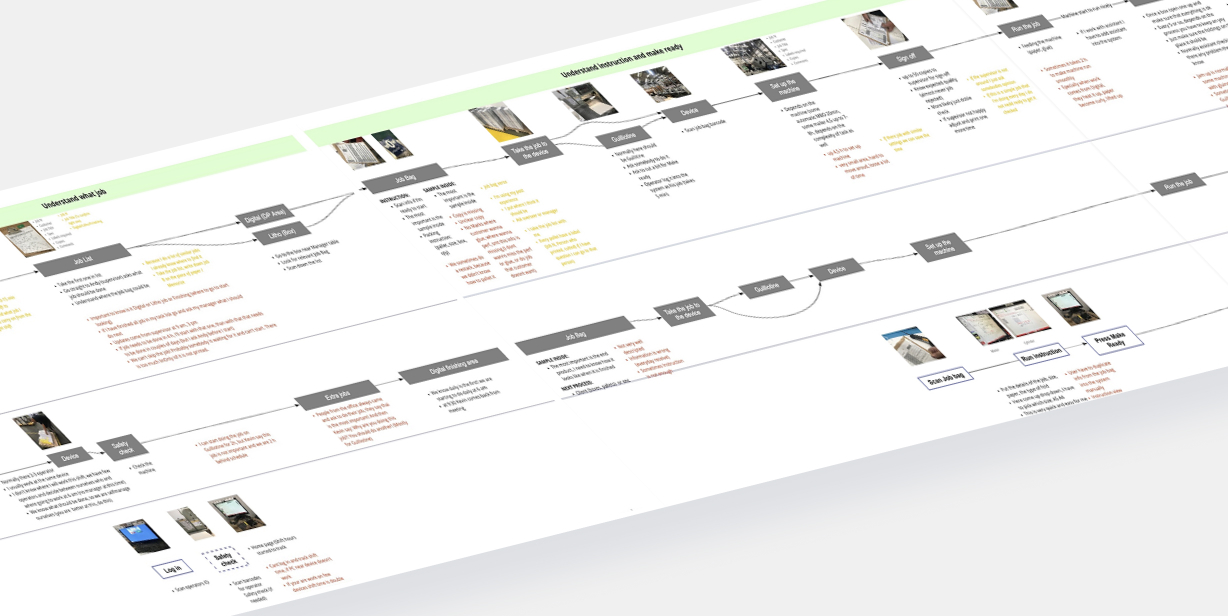
User Journey Mapping
To cover the whole operational process and not miss any action that can be important for future solution usefulness.
- To highlight pain points
- Identify opportunities for improvements
Ideation
Generated on brainstorming sessions — ideas were evolved into List of improvements and mind map of improved process itself.
Design
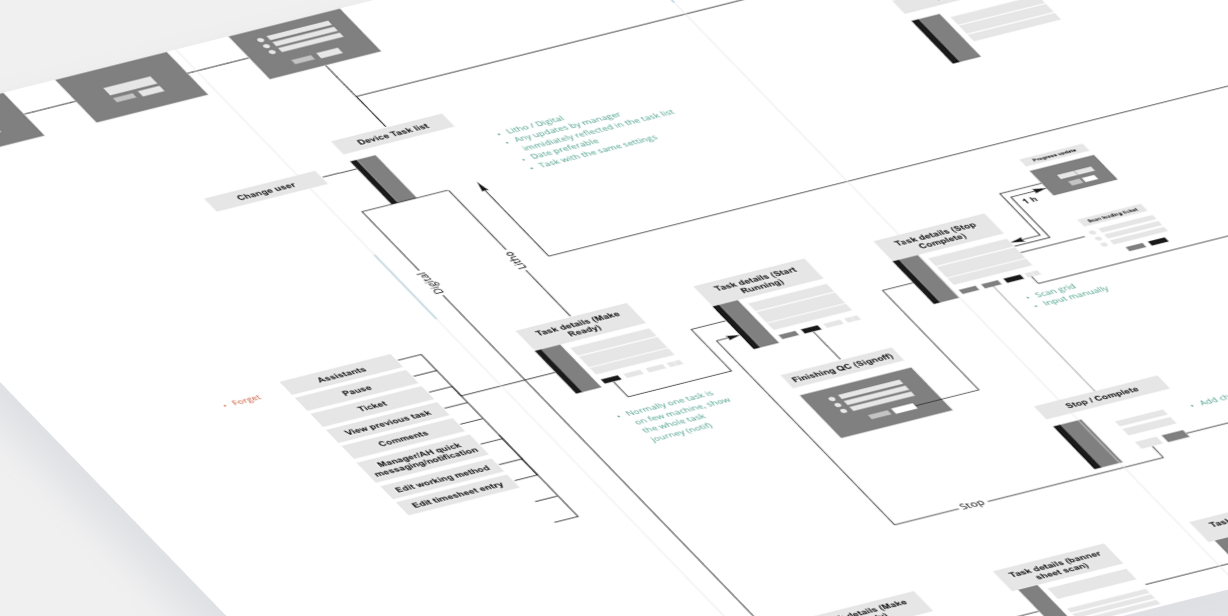
With an established design system already in place, focus shifted entirely to information architecture and workflow logic — ensuring the solution reflected real operator sequences, not assumed ones.
Usability Testings
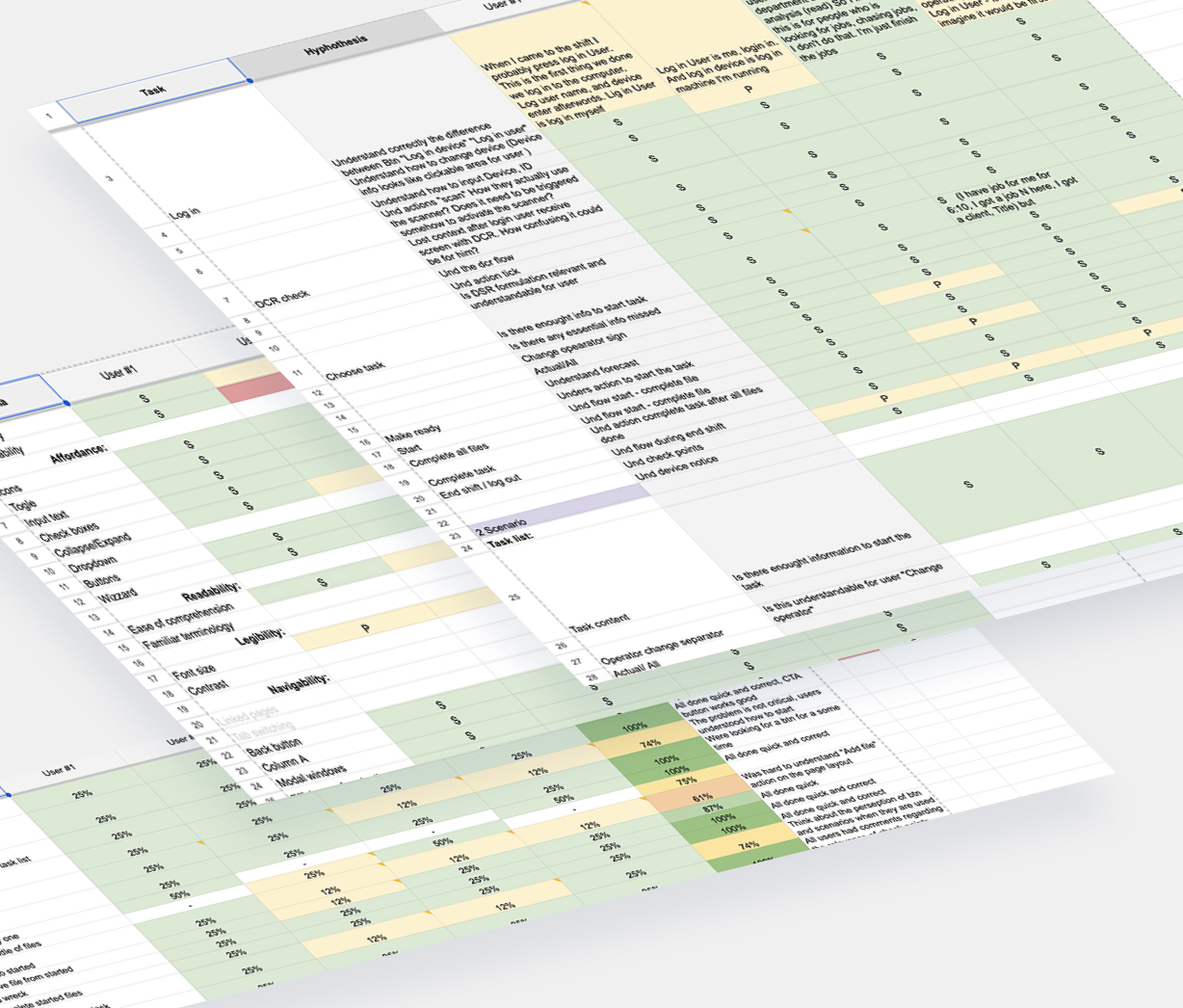
7 sessions with real users in real context and analysis and documentation.
Results
6 months (research → redesign → validation)
6 months (iterations and support)
2 Product Designers (work in parallel)
1 Visual Designer
User Impact:
- Workflows redesigned to reflect real operator behavior — eliminating the gap between system logic and working reality
- 25–30% improvement in task completion time, validated through 7 usability testing sessions with real users in context
- Hidden workarounds and undocumented steps surfaced through ethnographic research and removed from critical flows
- Operators described the new system as relevant, practical, and supportive of their daily work
Business impact:
- Reduced risk of costly rework by ~40% through early issue identification across 60+ hours of field research
- Stakeholder perception shifted from "visual designer" to strategic UX partner — achieving full buy-in for research-led decisions
- Real workflow documentation delivered as a permanent reference artifact for future product development
- Increased confidence in product direction across operator teams, supporting higher adoption potential
The most valuable outcome in this project for me wasn't the redesign, but how Paragon changed its understanding of design itself. Shifting a client from "make it look nice" to "research drives product decisions that bring value for business" is harder than any UX challenge. And this shift turned a single project into a long-term partnership with visible results.