Vasari
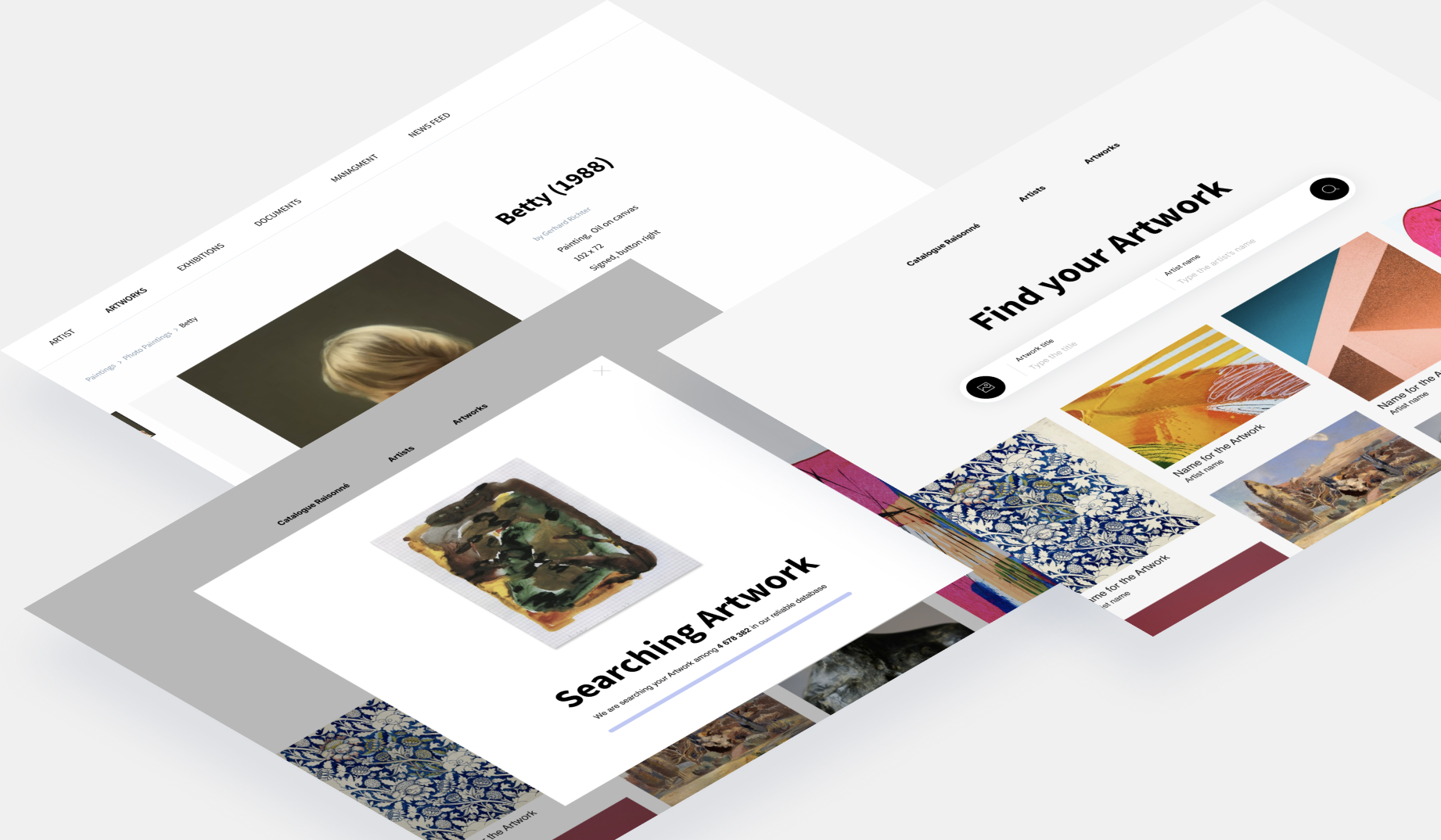
Challenge
Manual fragmented processes to store and document artist's work, leading to data loss and gaps in historical records.
Impersonation, misattribution, and forgery creating a lack of transparency and security for collectors and institutions.
Process
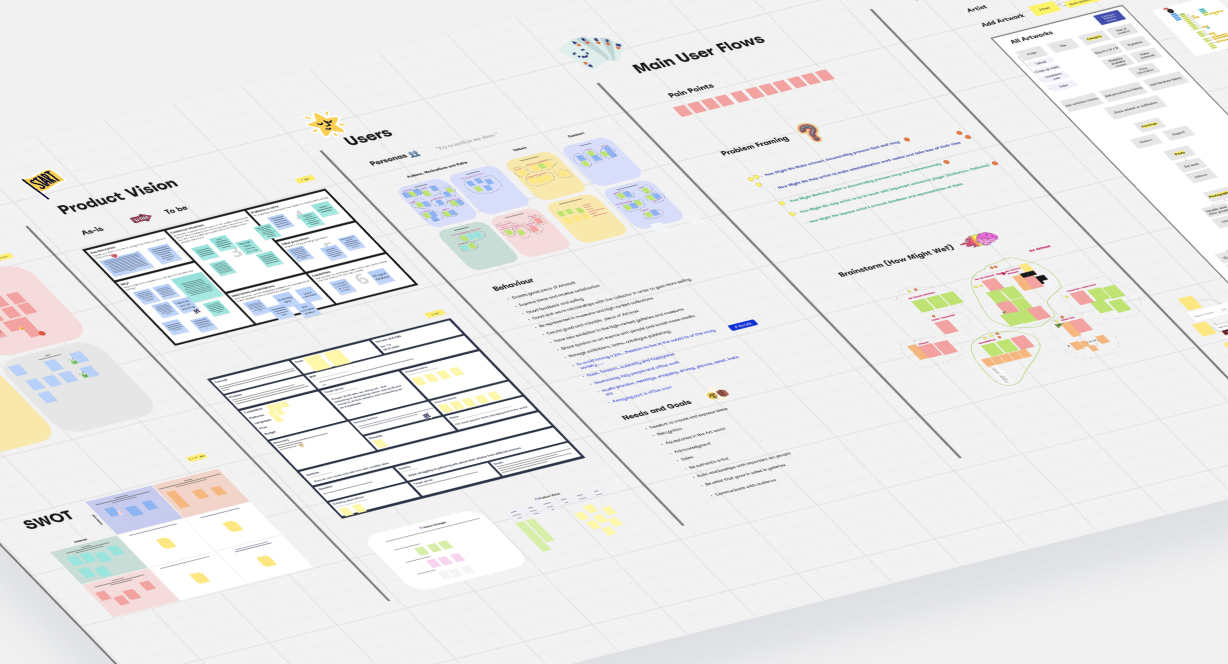
discovery & thinking workshop
Conducted 2 workshops with stakeholders to understand the industry context and define the product vision.
Covered:
- user groups (artists, galleries, collectors)
- their goals
- complexity of relationships
- key opportunities
user research
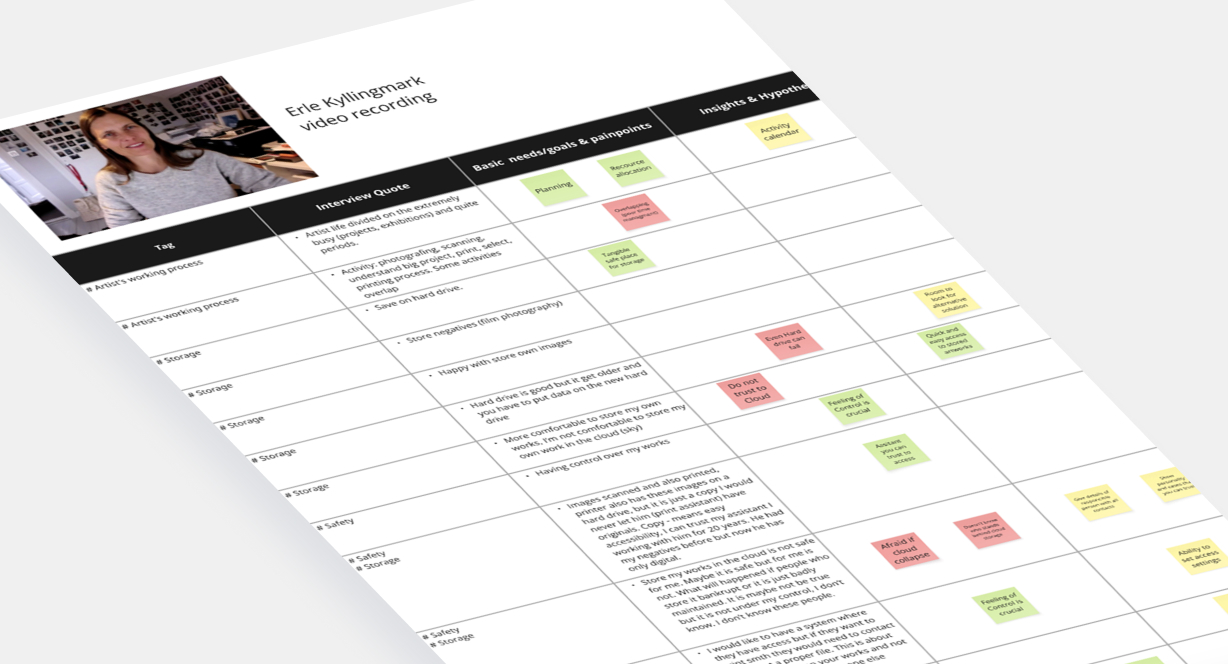
After defining the initial vision, conducted a series of user sessions to validate hypotheses and uncover insights.
Focused on:
- user needs and goals across groups
- key pain points
- opportunity areas
Insights were synthesised and translated into the product scope.
UX strategy & system design
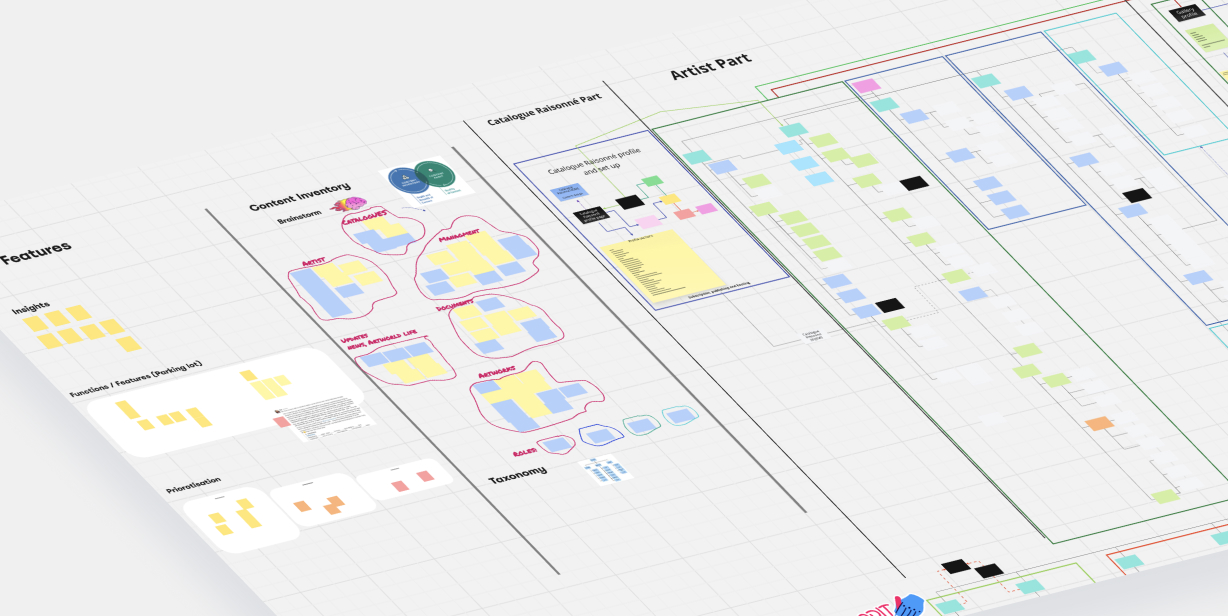
Defined product structure and system logic, including entity model, user roles and permissions, and core interaction flows.
Aligned stakeholders on product scope, priorities, and delivery roadmap.
Established a foundation for scalable, consistent product development.
User Interface
design system
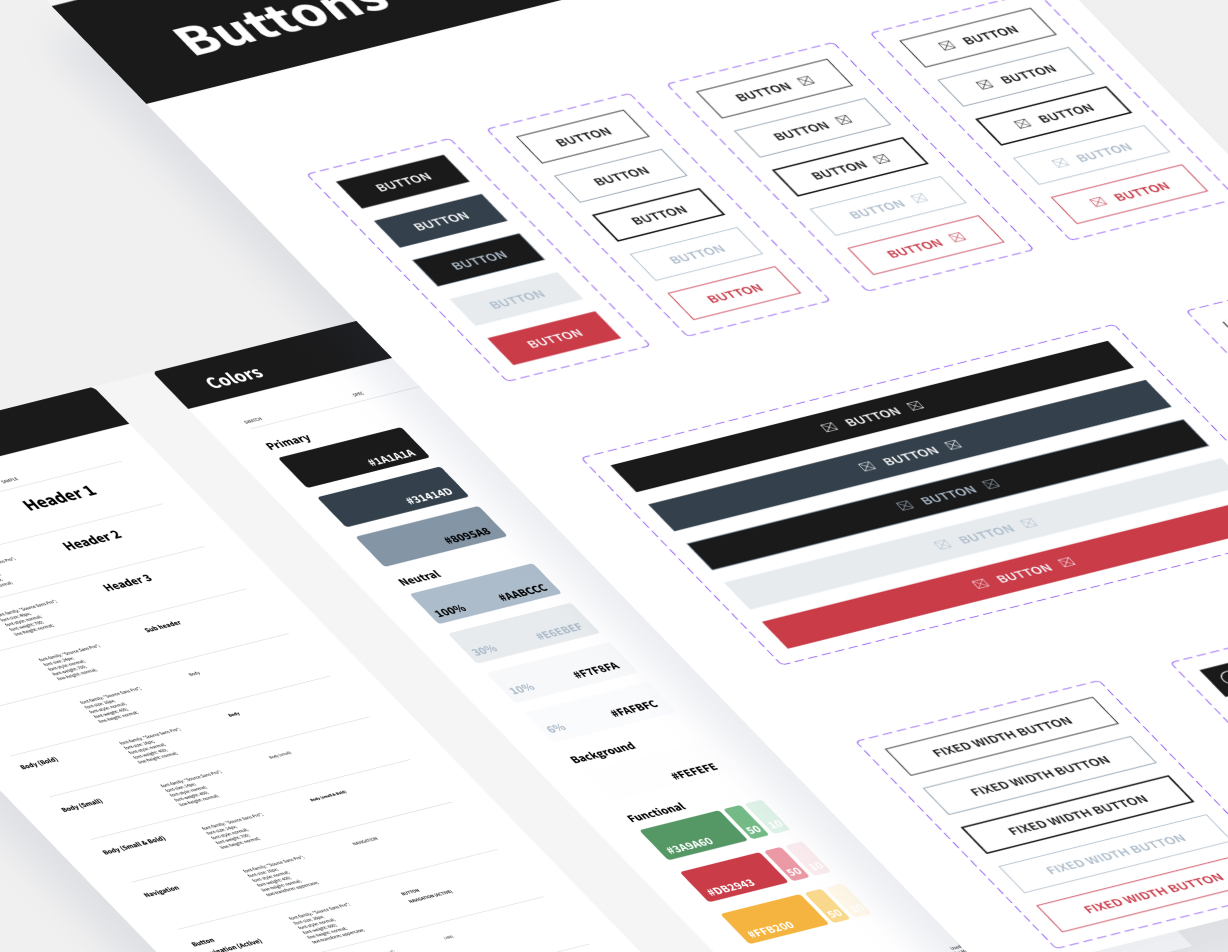
To support consistency and scalability, I developed a structured design system built on tokens, reusable components, and variables.
The system defines typography, color, spacing, and interaction patterns, ensuring a unified visual language across the product.
visual direction
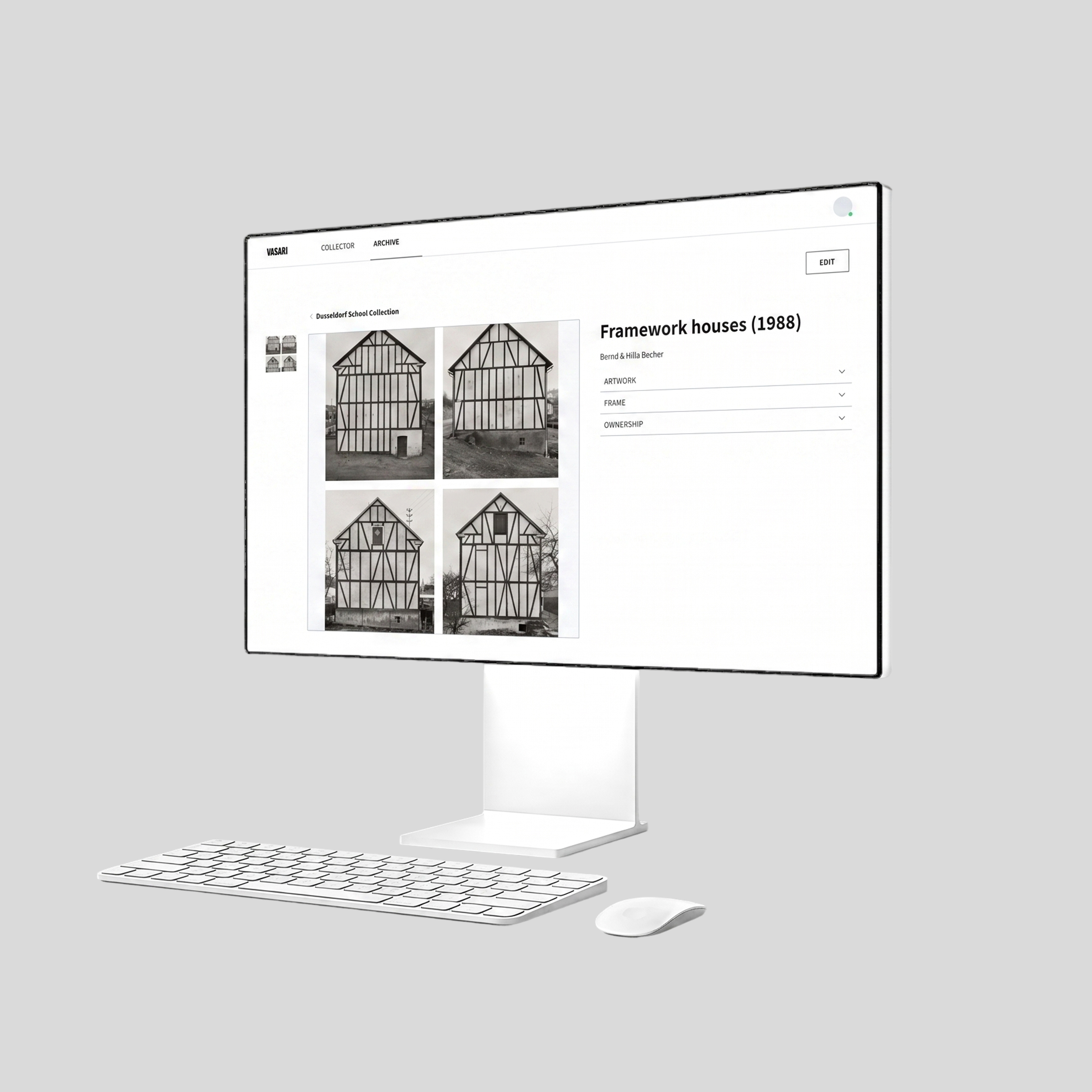
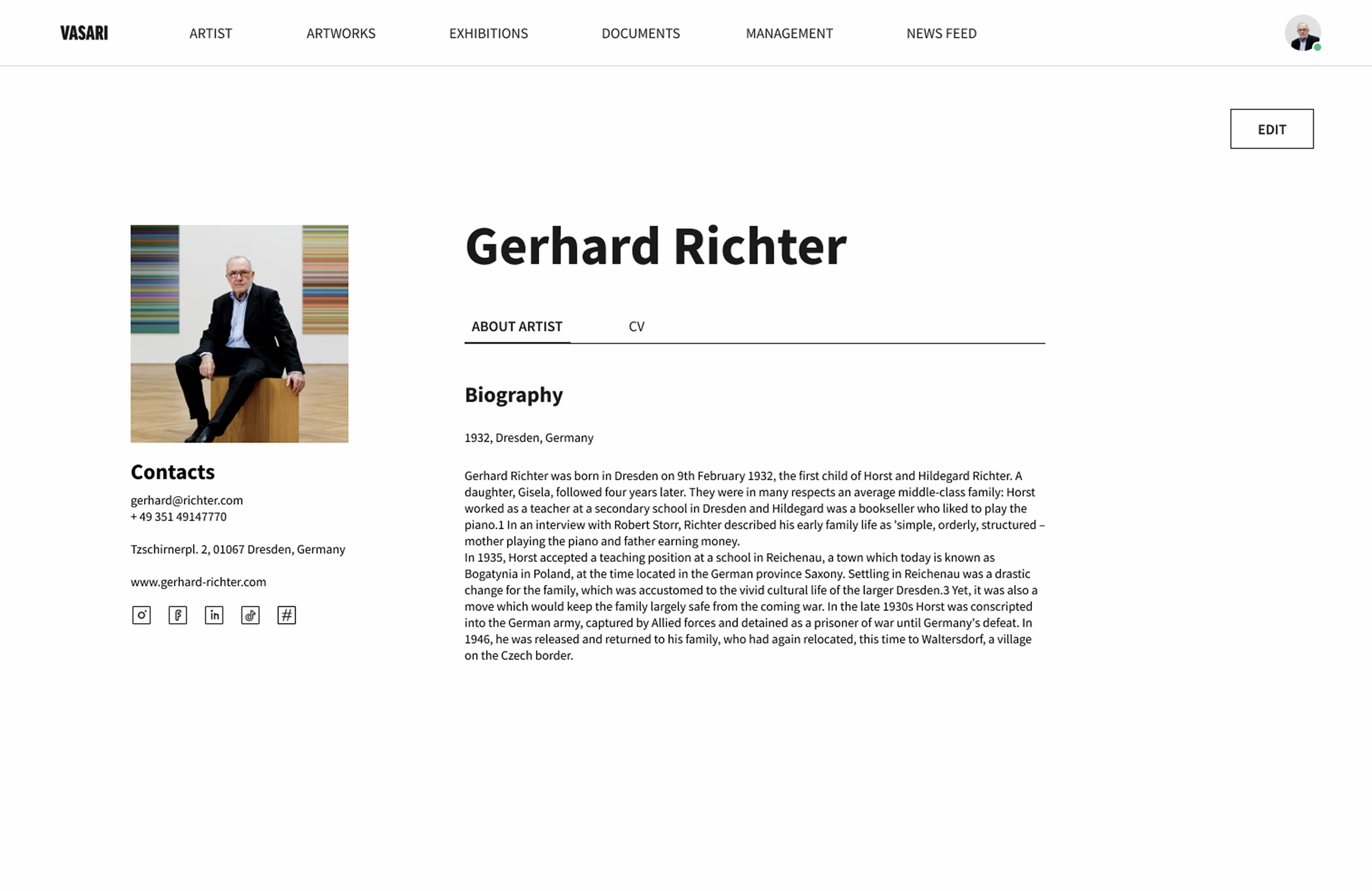
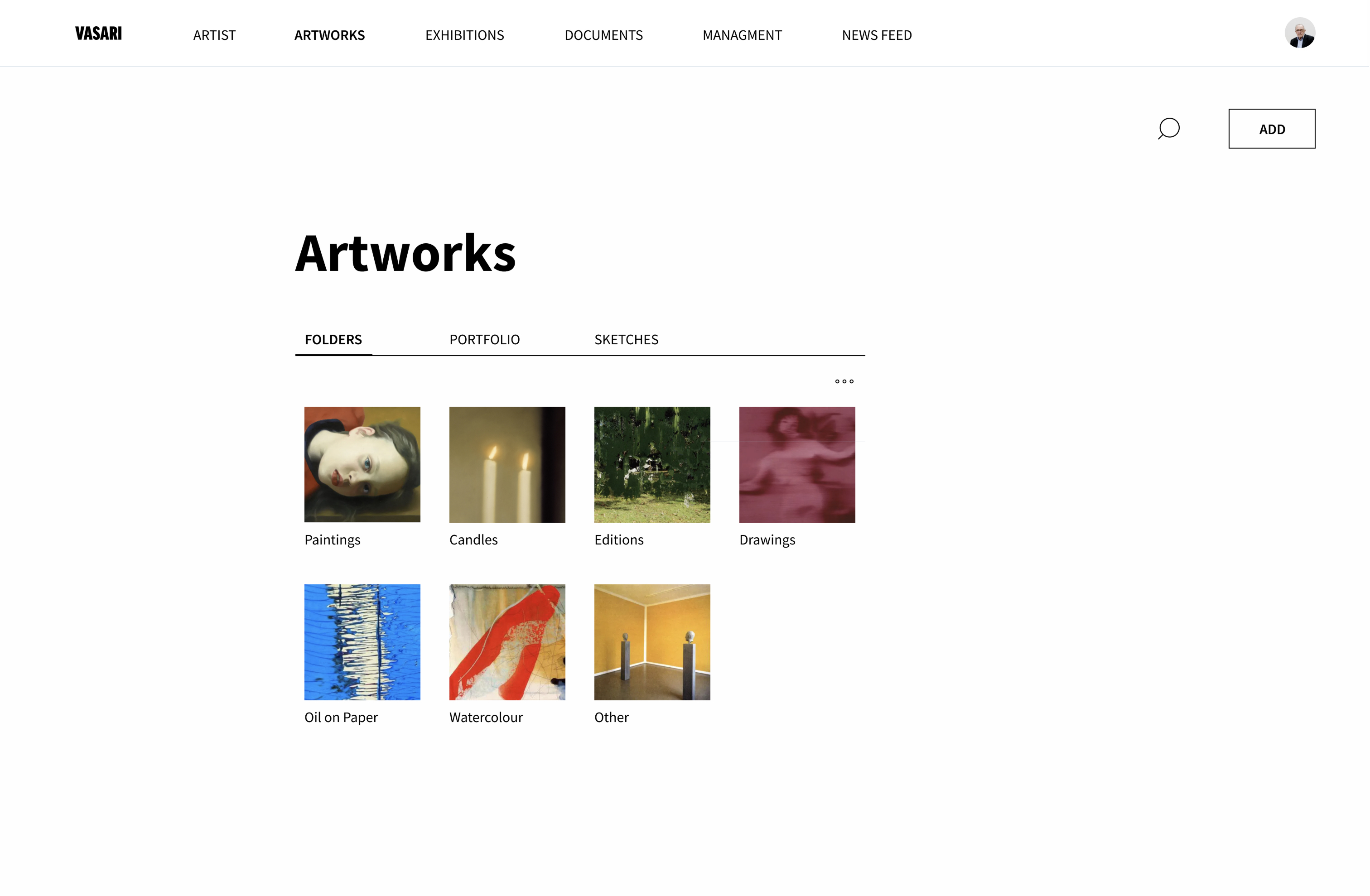
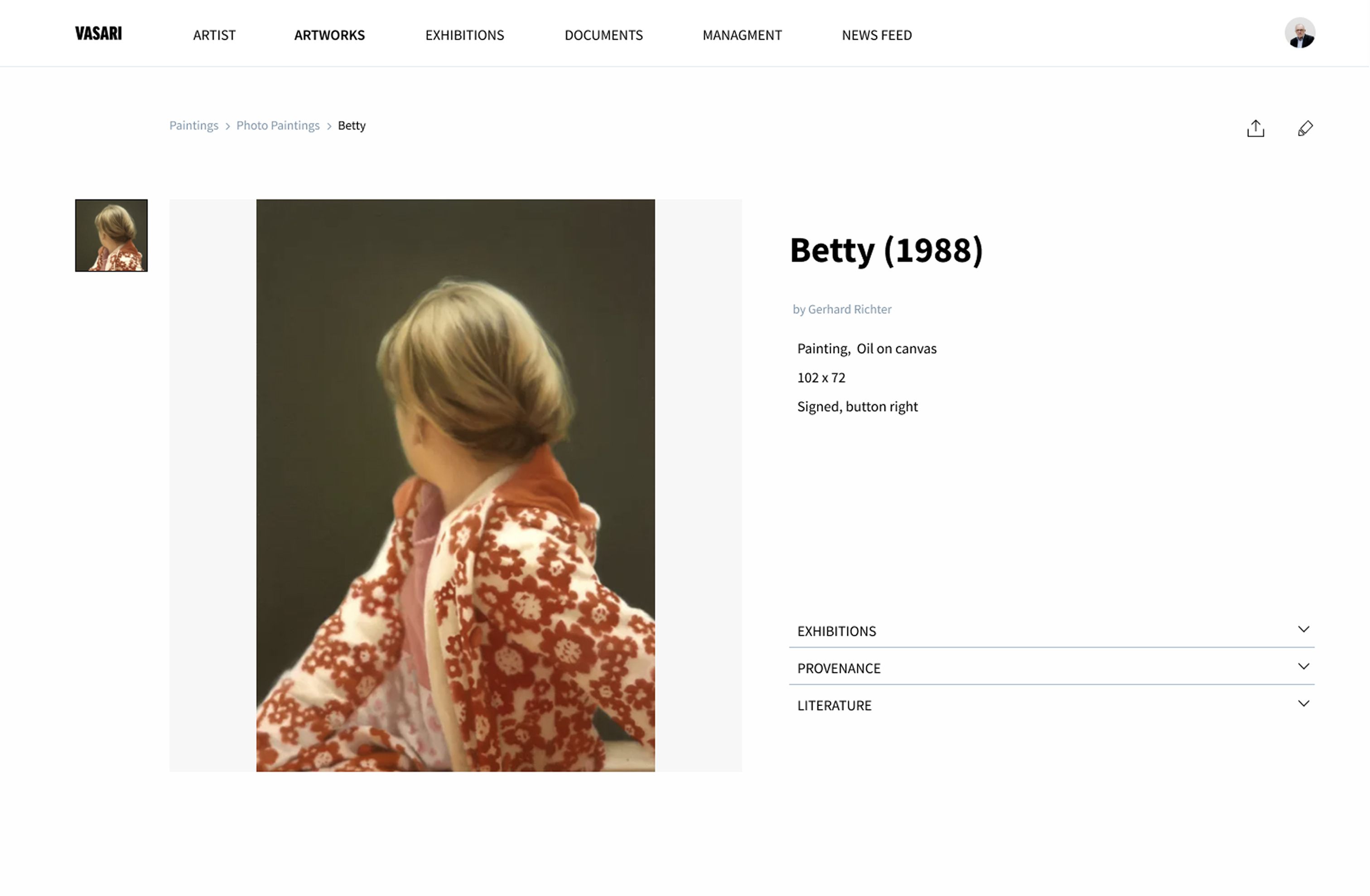
Black-and-white palette with minimal use of color, it reflects that the artwork itself must remain the primary focus.
The goal was to create a sense of quiet sophistication. Aligned with the expectations of collectors, galleries, and institutions who value aesthetic, timeless, refined approach.
Solution
Research revealed key challenges: fragmented manual documentation, and lack of trust driven by impersonation, misattribution, and forgery.
The solution was designed to address these issues across:
identification, attribution, authenticity, and data management.
Credible Identification
Introduced a secure onboarding flow combining legal document submission and face verification to ensure trusted user identity.

Accurate Attribution
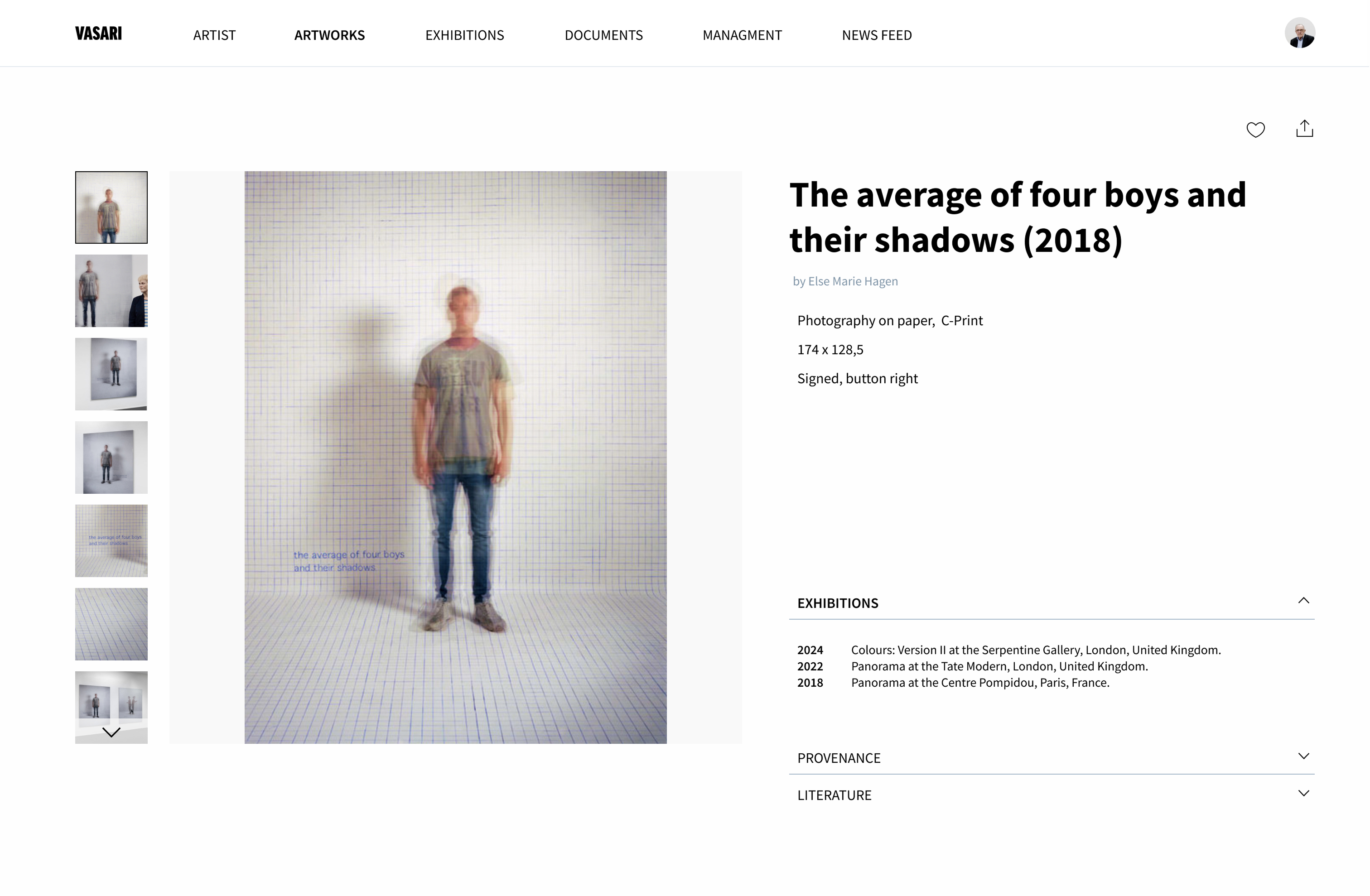
Designed a structured attribution model linking artworks to verified artists, provenance chains, and ownership histories — making the record trustworthy and dispute-resistant.
Artwork Authenticity
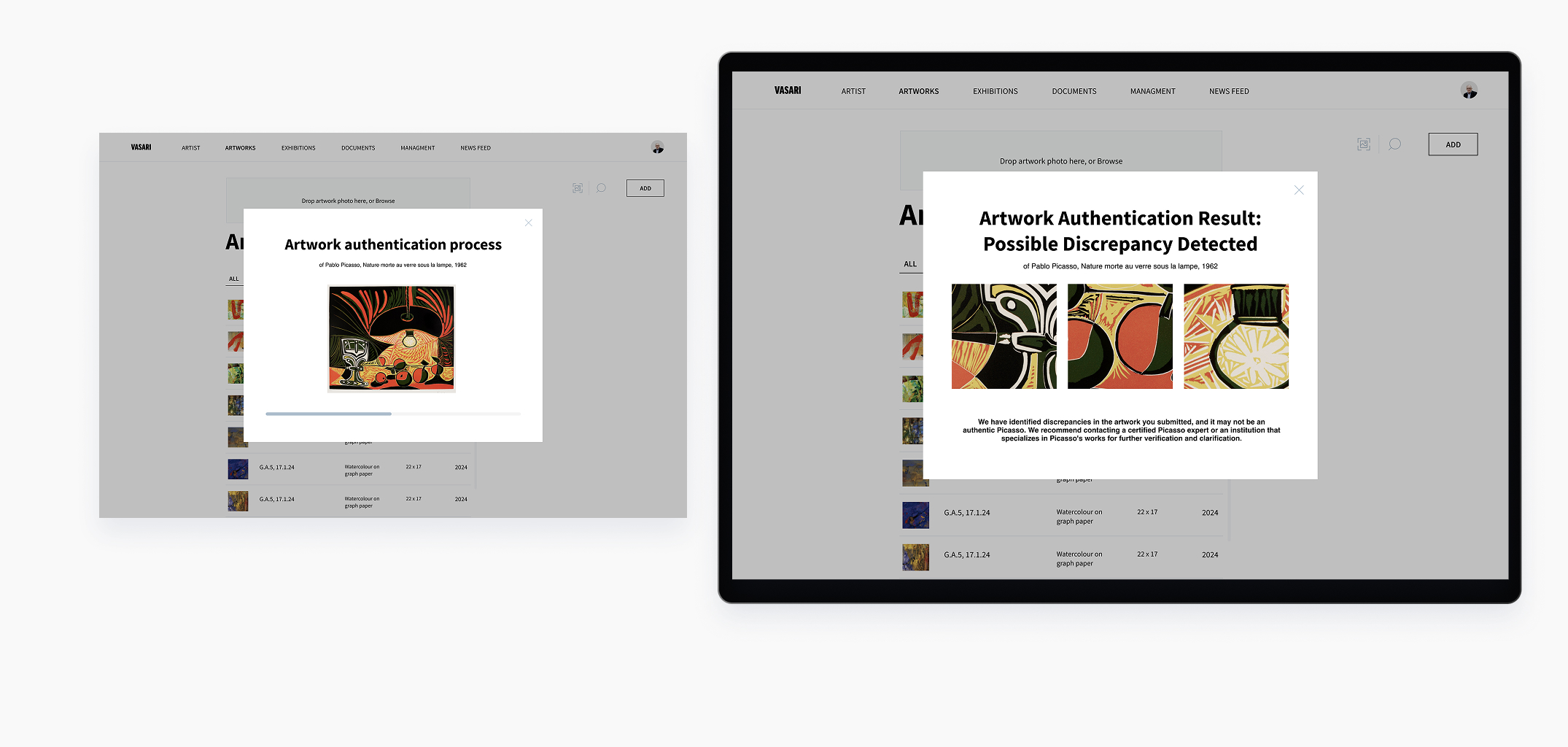
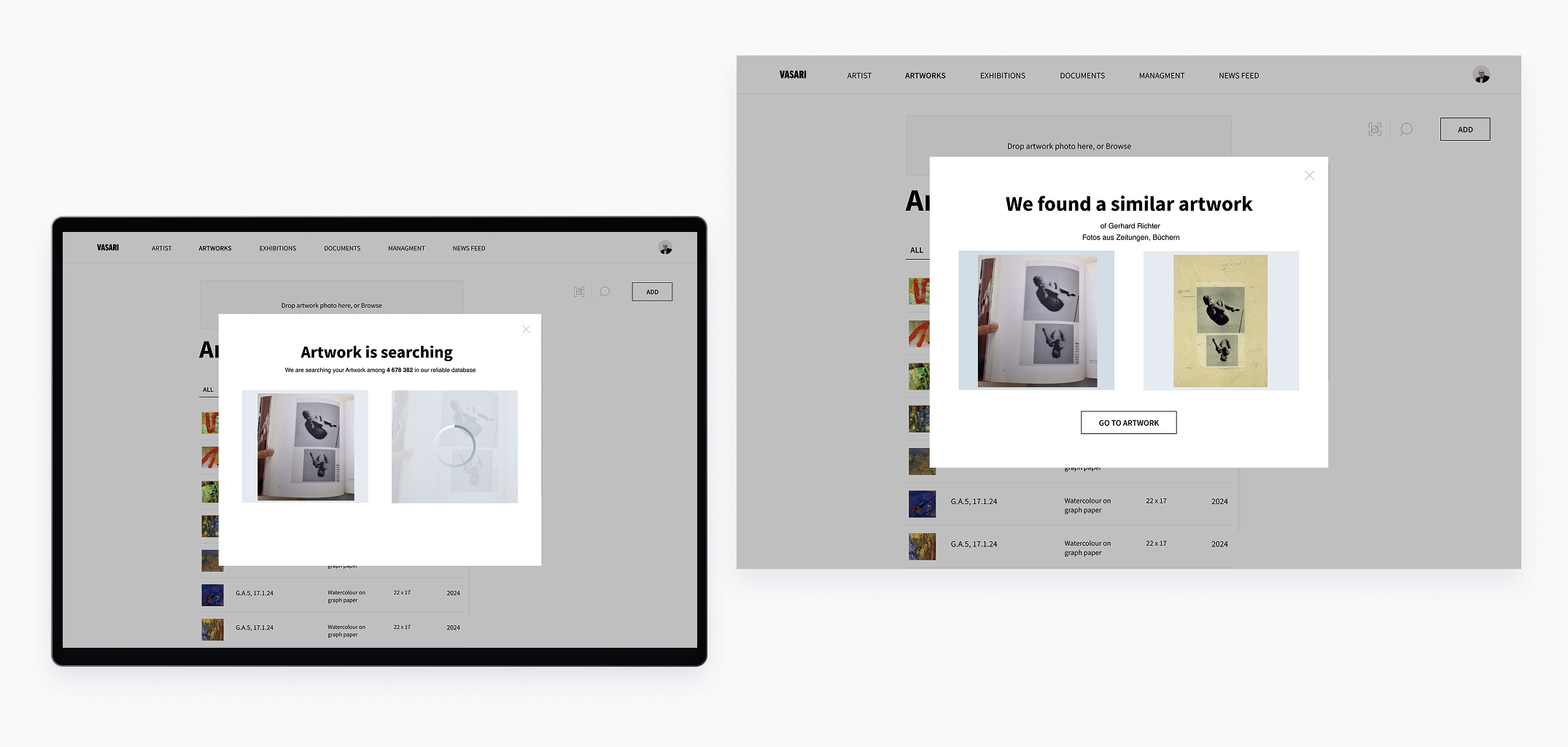
Designed a reliable artwork database allowing users to validate authenticity and identify forgeries, copies, or stylistic imitations.
Simplified Data Management
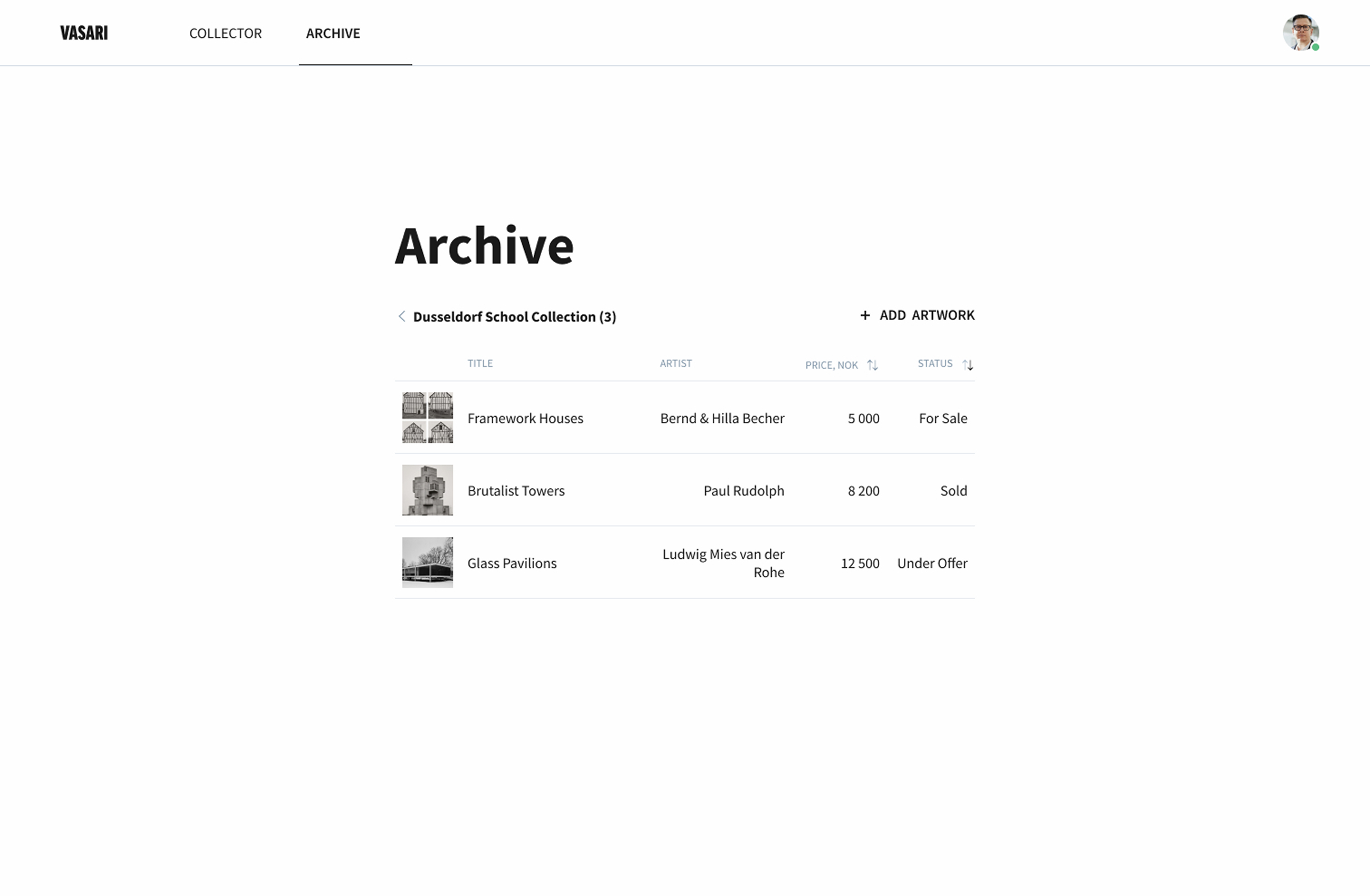
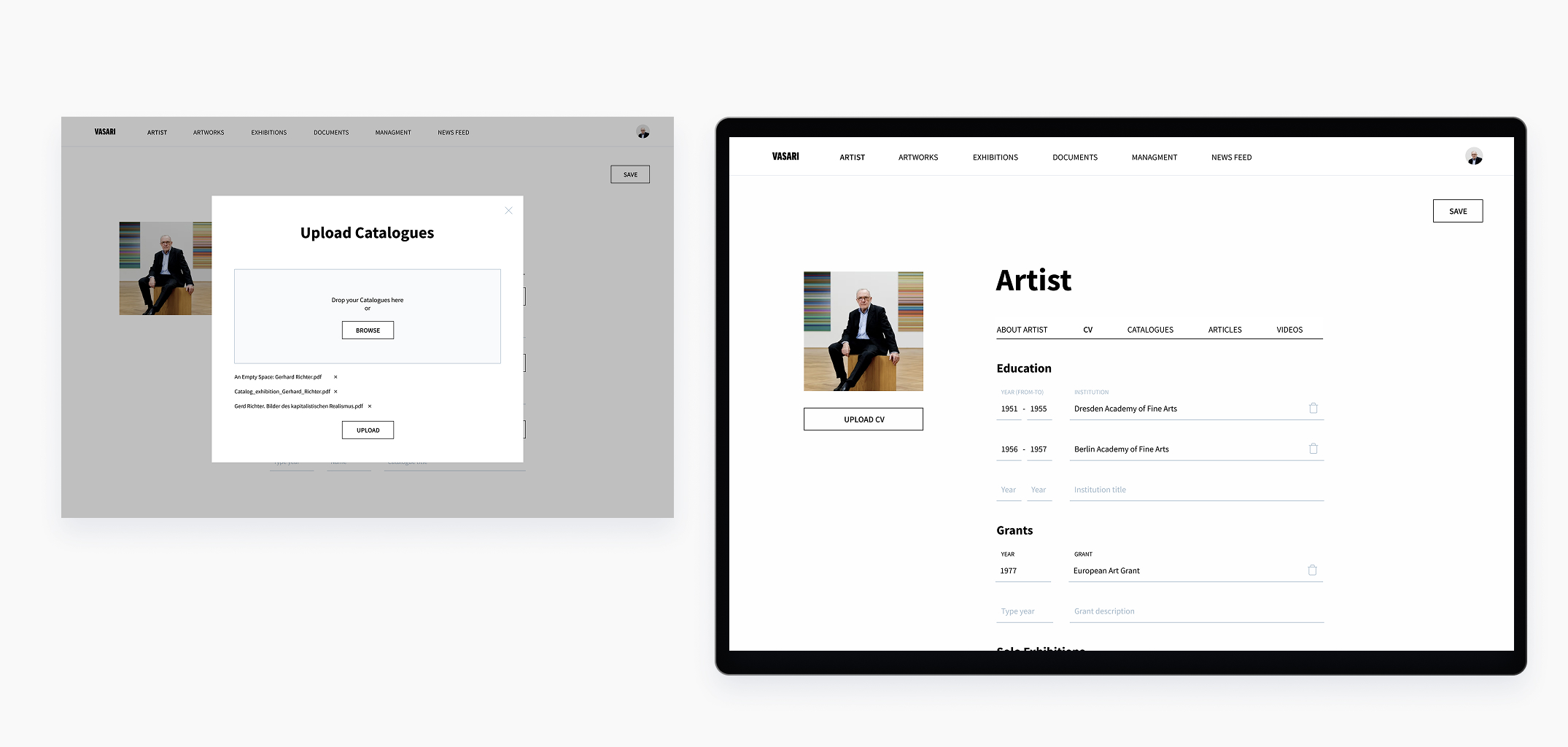
Streamlined documentation by enabling bulk uploads from analog and digital sources. The system automatically parses and maps data to structured fields, reducing manual input to minimal corrections.
AI-assisted Documentation
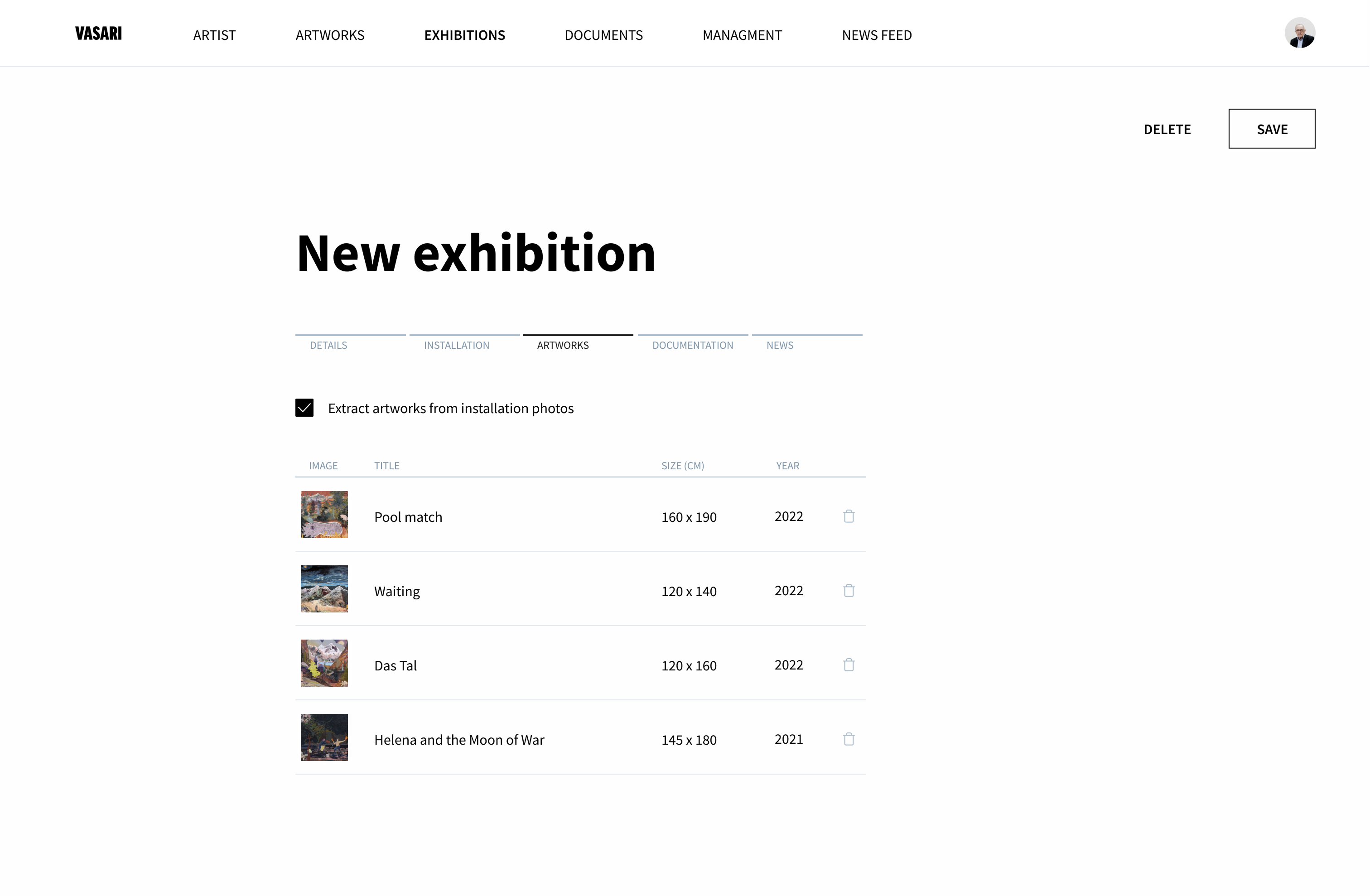
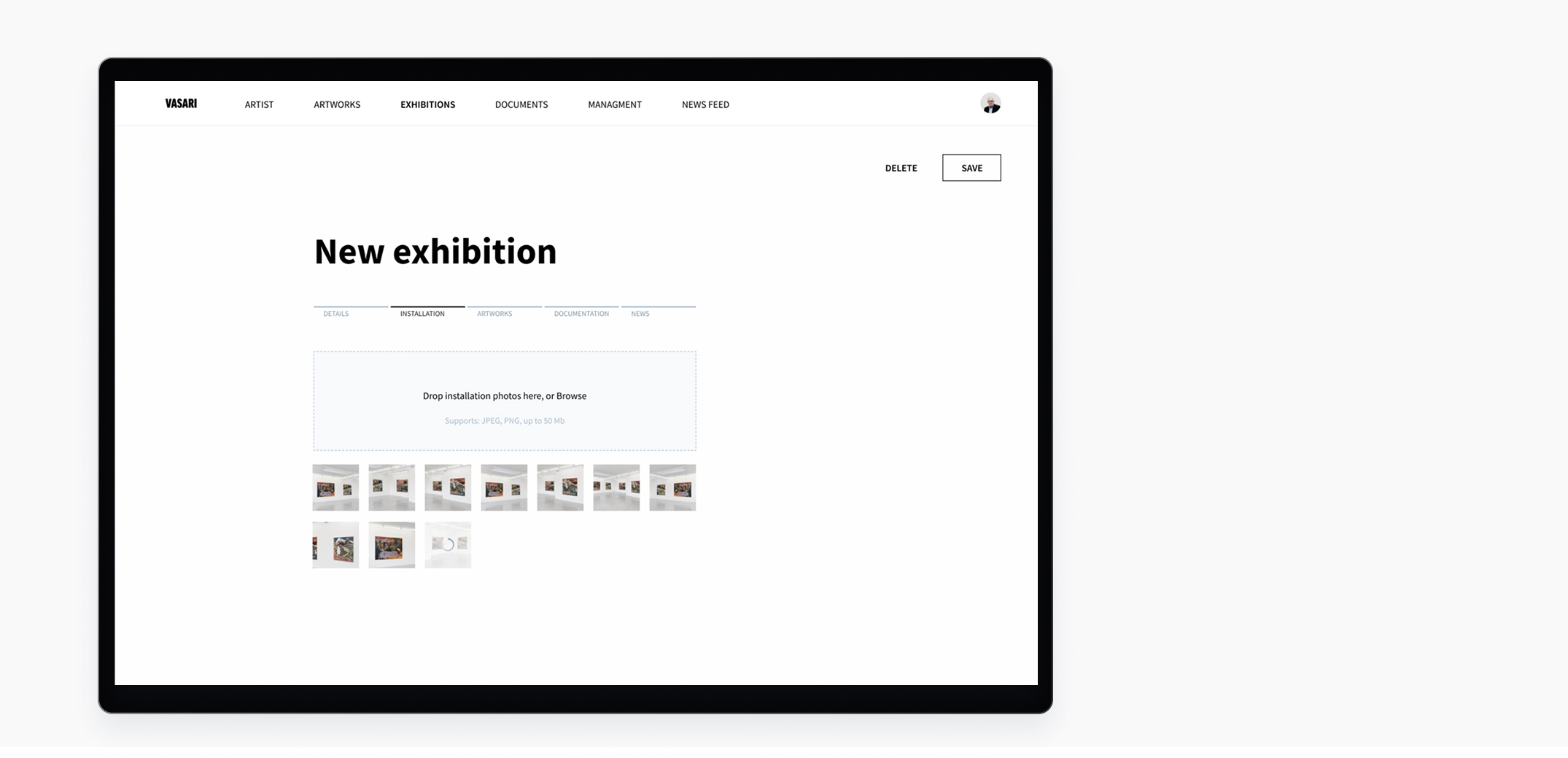
Eliminated repetitive manual entry by allowing users to upload exhibition photos, with AI extracting and generating structured artwork data.
Results
12 months
Vasari is currently in pre-launch phase. The design foundation, architecture, and investor materials were completed and used for fundraising.
Solo Product Designer (end-to-end ownership)
Research:
- 16 user sessions across 3 groups — 8 artists, 4 galleries, 4 collectors
- Stakeholder alignment sessions at every product milestone
Design output:
- 3 user types defined with full persona and journey documentation
- 30+ end-to-end user flows designed and validated
- Complete design system built from zero — tokens, components, variables, interaction patterns
- Full product architecture and UX strategy delivered
Business impact:
- 10 investor pitch decks produced using design deliverables as primary material
- Design foundation established for fundraising and pre-launch development
- Design library introduced to engineering team estimated to reduce component development time by ~30% (based on sprint velocity improvements during collaboration)
Vasari sits at the intersection of two worlds I know deeply — product design and art history. The key insight was the resistance of the art market to digital tools, because of trust and security. This made the core design challenge: to make something the art world would believe in, and I believe we achieved that.